






Crime mapping tool puts power at public’s fingertips
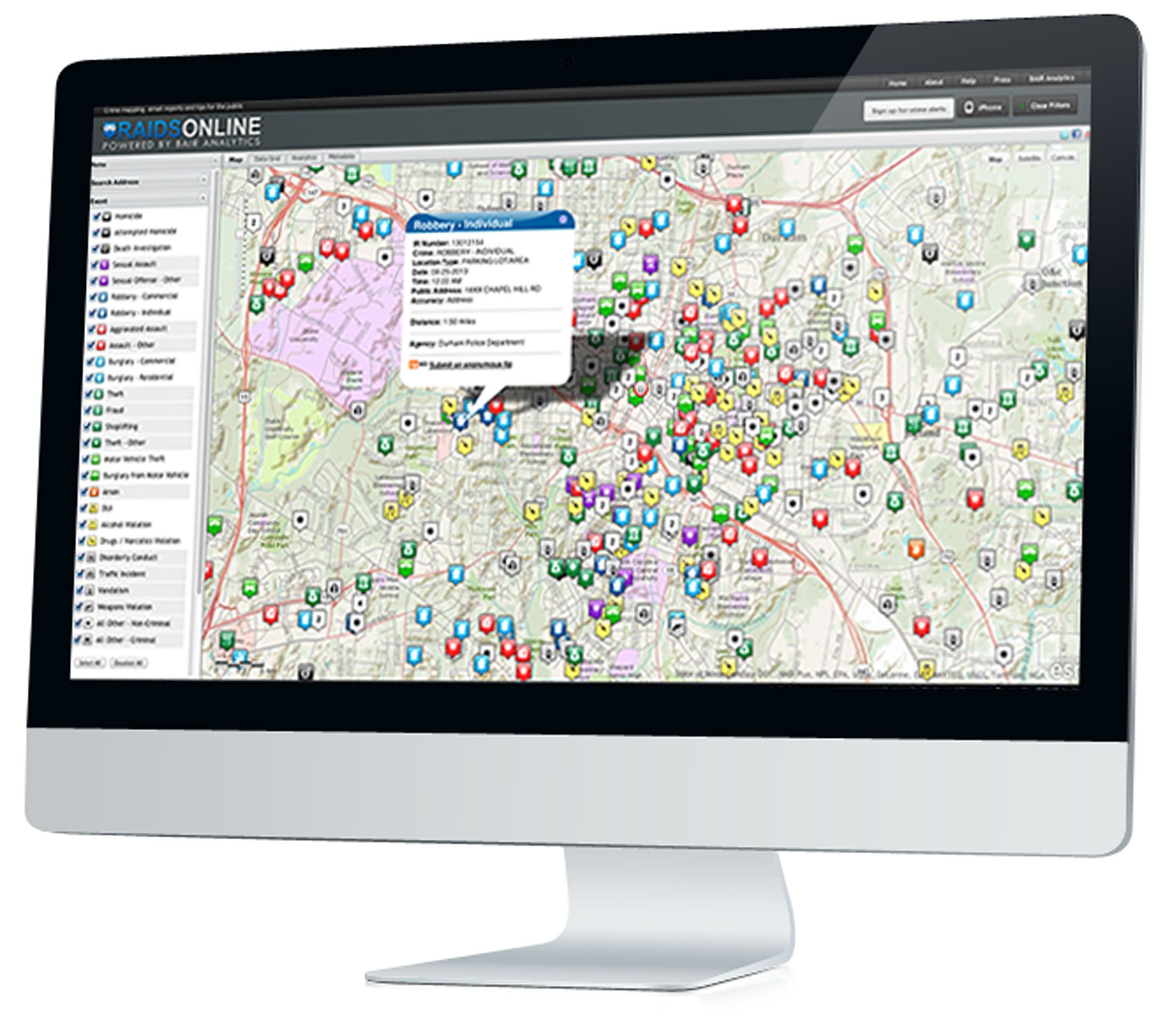
Colorado Springs police have put the power to find crime trends, patterns and “hot spots” in the public’s fingertips.
In August CSPD launched “RAIDS Online,” a national and regional online crime mapping database that’s free and accessible through any web browser. The site displays all crimes reported to police across the city, including murders, assaults, robberies, burglaries, car thefts and fraud.
Any user can find and analyze the crime data, use it to make educated decisions on how to address and prevent crime, foster a sense of transparency from police and empower the public to make a difference in their communities, according to Colorado Springs police Crime Prevention Officer Jonathan Sharketti.
“Just last week I did a presentation of RAIDS Online to a neighborhood watch group, printed off the last four months of data crime reports in their area and they loved having all that information,” he said. “One apartment manager used RAIDS and she said it was very user-friendly and intuitive, and that she had no problems navigating it.”
RAIDS Online, which stands for Regional Analysis and Information Data Sharing, is offered by Bair Analytics, a Lakewood-based company, to law enforcement agencies across the U.S., said Vice President of Operations Susan Hammen.
“RAIDS Online presents all the information that police handle from day to day and fosters a sense of transparency between law enforcement and the public,” she said. “Traditionally, the crime reports were only handled by police and then picked by the media for news stories, but this allows everyone to know what is happening, and that’s powerful.”
RAIDS Online looks like a map of the U.S. – just like one on Google maps – but its customization capabilities allow users to look up reports by type of crime, area, day of the week or time of the day. They can even look at trends of crimes that have increased or decreased in a specific neighborhood, city or state.
Users also can set up customized alerts and notifications that can be emailed to them or sent through a mobile app available for both Apple and Android devices.
RAIDS Online does not include information about all calls for service reported to police, said Dennis Moore, former volunteer coordinator for Colorado Springs police’s Neighborhood Watch Program and 2011 Colorado Springs Public Safety Volunteer of Year.
“All the major crimes and calls that are top priorities for police are there, like robberies, burglaries, assaults and homicides,” said Moore, who helped expand Colorado Springs neighborhood watch groups from less than 200 to about 570 active groups during his six years of volunteer work. “But for neighborhood watch groups and their block captains, all the other calls for service, such as noise complaints, disturbances, 911 hangups and other lesser calls are important to know what’s going on in their neighborhoods.”
The incidents shown on RAIDS Online are those that resulted in police case reports being initiated, and they are different from calls for service, said CSPD spokeswoman Lt. Catherine Buckley. Calls for service data can be viewed at myneighbor hoodupdate.net/.
Moore, 66, added that there is no way to download the information on RAIDS Online to a file that can be printed and distributed at a neighborhood watch meeting, which he said does not help people without access the Internet.
“I’m not knocking the program,” he said. “It’s very useful and it’s nice that all the data is visible and accessible. But for people like me who want to get all the information for their neighborhood watch groups, I feel that it should include all the calls for service. That’s how people can be aware of their surroundings and avoid being victims of crime.”
About 500 law enforcement agencies across the country use RAIDS Online, with another 506 expected to be added to the system this month, according to Hammen. By 2015, she said, RAIDS Online will be the largest national crime mapping and analysis tool available.
“What makes RAIDS Online so efficient is that the data is entered into the system and presented to the user seamlessly, across jurisdictions, from all the agencies that contract the service,” Hammen said. “It doesn’t limit users to view just the crime reports in their city. They could be looking to move, their kids could be going to college, their elderly parents could be far away and they want to know if their neighborhood is safe. The information is all there, people just have to apply it.”
RAIDS Online also helps law enforcement agencies shift their crime-fighting efforts to intelligence-based policing by identifying crime flare-ups and hot spots, and placing patrol officers in areas where the surge in crime has been identified, said Colorado Springs police crime analysis unit supervisor Molly Miles,
“In terms of analytical capability, it puts the information in the hands of sergeants who are trying to plan deployments and use the police department’s manpower as efficiently as possible,” Miles said. “It makes sense for the resources to be allocated where crimes are actively happening.”
Miles said RAIDS Online is updated daily at midnight and new crime reports show up on the map within 24 hours of occurring, or as soon as Colorado Springs police records management uploads the information to their system. RAIDS Online is included in a suite of crime analysis products that Bair Analytics sells to law enforcement agencies for about $9,600 per year, Miles said, funded through the police general fund.
“This is a relatively new tool within the department and we haven’t reached its full capacity, even by a long shot,” Miles said. “The goal is for all our sergeants, patrol officers and crime prevention officers to become power users inside their divisions, who can then go out and train the neighborhood watch groups to use it as well.”
For Hammen, the most important feature of Raids Online is that it can empower people.
“When we can inspire and enable the community to use the information to protect themselves, their property, and to prevent themselves from being a victim, that’s monumental,” she said.