






Teen drinking a timeless problem
Two teens died, one was injured and a fourth faces charges of vehicular homicide. All were drinking before a Monument-area crash in the early morning hours on Labor Day.
Last month, three teens were taken unconscious to hospitals from house parties in Fountain, and several adults were arrested on suspicion of supplying booze for the parties.
Underage drinking is a timeless problem, said Colorado Springs police officer Bill Walsh, who works as a campus resource officer for Cheyenne Mountain School District 12.
“It’s the same. It really hasn’t changed over the years,” he said. “Kids bring it to school or drink at parties for a variety of reasons.”
Those reasons include peer pressure, wanting to fit in, establishing a certain reputation and seeing if they can get away with it, Walsh said.
On top of that, studies have shown that the teen brain isn’t fully mature, so kids don’t always make the best decisions.
“It’s still seen as a cool thing,” said Debbie English, executive director of Colorado Springs Teen Court.
For 21 years, the nonprofit organization has provided restorative justice sentencing options for area teens charged for the first time with a misdemeanor, such as underage drinking or marijuana use.
Alcohol is easy to get, teens say.
Older siblings, friends and even parents supply minors with booze.
Some teens steal it from home or stores. Another method: “Some people call it going fishing. You go to liquor stores and wait until someone will buy you something. Or you pay homeless people to buy it,” said DeAnna Christensen, a junior at Palmer High School and a Teen Court volunteer.
Adolescents want to grow up and act like adults, and they see adults drinking, so they figure it’s all right for them, English said.
“I’m kind of amazed that attitudes haven’t changed as much as you’d think,” she said. “We still have parents say, ‘I’d rather them be doing this at home; I’d rather keep an eye on it.’ The line gets blurred in a lot of homes, and parents just don’t see the problem with that.”
Drinking and driving
Two weeks have passed since the horrific car crash that took the lives of two Palmer Ridge High School seniors, but the sadness, disappointment and anger are lingering like the waning days of summer.
“It’s grim. Lots of people are still wearing black,” said 20-year-old Taylor Tanner, who coaches girls’ volleyball at Palmer Ridge. “Things are different. Everybody’s been affected. Everybody’s trying to get back into it, but it’s hard.”
Early Labor Day morning, the start of the new school year turned from exciting and promising into a nightmare no one wants to think about.
Marshal Gregory, the 17-year-old driver from Parker, missed a stop sign while driving in Black Forest with three buddies, veered off the road and crashed into a thicket of trees. Two passengers, 17-year-old Beau Begier and 18-year-old Ryan Pappas, both beginning their senior year at Palmer Ridge, died at the scene.
The third passenger, Jack Mitchell Clark, 17, was badly injured and hospitalized for several days.
After receiving treatment for minor injuries, the driver was charged with vehicular homicide and vehicular assault. The judge also ordered him to undergo substance abuse therapy.
Classmates described the young men as personable, talented and well-liked.
According to the crash report, all four teens had been drinking. Speeding also was cited as a contributing factor.
“It didn’t have to happen,” is a common reaction. But it did – and it does.
Despite the repeated school rallies with motivational speakers warning about the dangers of drinking and driving, the health talks about how underage drinking affects developing bodies, the displays of mangled cars involved in teen crashes, the “drunk goggle” simulations and the pledges students take to not drink and drive, many do.
Motor vehicle crashes are the leading cause of death for 15- to-20-year-olds in the United States, according to the Centers for Disease Control and Prevention.
Not all are alcohol-related. About one in five drivers, ages 15 to 20, who are involved in fatal vehicle crashes were drinking, according to CDC statistics.
In a national survey conducted in 2011, about one in four teens reported that within the previous month they had ridden with a driver who had been drinking alcohol, and 8 percent said that within that same one-month period, they drove after drinking alcohol.
Locally, law enforcement statistics and surveys filled out by teens appear to indicate that alcohol use among teens has dropped in recent years.
A statewide survey on youth risk behaviors conducted by the Colorado Department of Health and Environment shows that, overall, teens in 2013 were less likely to drink than in 2005.
In 2005, 60.6 percent of 12th-graders reported that they had had at least one drink in the past 30 days. In 2013, 41.3 percent said they had taken at least one drink in the previous month.
House parties
Last month, Fountain Police Sgt. Thomas Coates and seven other officers broke up a birthday party in a Fountain neighborhood, resulting in the arrest of two adults suspected of supplying alcohol to 48 underage drinkers, 18 of whom were under the age of 18, according to police reports.
Coates was dispatched about 1 a.m. Aug. 23 to a residence off Fountain Mesa Road on noise complaints. In the few minutes it took him to reach the home, he remembered, the situation escalated.
“First, we heard it was a noise complaint, then that there were some people in the street and fights were possibly breaking out,” he said. “There was nothing to prepare us. We realized it was a much more chaotic and volatile situation when we got there.”
People ran as Coates’ patrol car pulled up. At least 30 cars clogged the road as people tried to drive away. Coates and another officer blocked the path with their cruisers, concerned that many partygoers may have been drinking alcohol.
A 14-year-old boy was found unconscious on the road by the house, lying in his vomit, Coates said. An unconscious 17-year-old girl had been dragged into the front yard. Police called for ambulances.
“When it comes to minors and underage drinking, it’s always dangerous because they don’t know what the limits are,” Coates said. “They have no filter, they think they know what they’re capable of consuming and they binge drink, which can lead to memory loss, sickness, possible alcohol poisoning and definitely bad decisions.”
The house was littered with liquor bottles and people were passed out on the floor, Coates said. There were people in every room, all of them consuming alcohol, he said.
The two adults who identified themselves as the hosts of the party and homeowners, 36-year-old Margaret Rangel and 26-year-old Lucas Salas, were arrested on suspicion of supplying alcohol to minors, court records show. They each face 30 misdemeanor counts of unlawful acts and 18 felony counts of contributing to the delinquency of a minor, according to court records.
Just three days earlier, a 17-year-old male was found unconscious on another Fountain street after drinking large quantities of alcohol and the cold medicine Mucinex. Dawn Mayes, 38, Cameron D. Allgier, 18, Trey D. Dawson, 21, and Amanda Herzog, 24, were arrested on suspicion of contributing to the delinquency of a minor, a felony.
House parties and underage drinking are especially concerning because officers never know what to expect and can’t predict when circumstances could take a turn for the worse, said Coates, who has been a police officer for 12 years.
“When you have a large group of people, in this case most of them minors, and you throw in large quantities of alcohol, there’s every opportunity for things to go very wrong,” he said. “Someone could get really sick and need medical attention. Someone could get sexually assaulted. Someone could get into a fight and get hurt, maybe even fatally.”
If adults are found in an ongoing police investigation to have supplied alcohol to the four teens involved in the Labor Day crash, they also could face charges.
Drinking scene ‘pretty bad’
Teens say underage drinking happens more than people may think.
Taylor Roney, a Palmer High School senior and Teen Court volunteer, said 10 kids reportedly drank before the school’s first football game of this season, drove there and got caught drinking at the game.
“You’d expect people to be a little more responsible,” she said. “People don’t understand how much of a big deal this actually is.”
Tanner, the Palmer Ridge volleyball coach, agrees, saying, “There’s a lot of it.”
She said she doesn’t drink alcohol and often acts as the designated driver when she’s around friends.
“It’s something kids do for fun, and they don’t think (a crash) is something that will happen to them,” she said.
Not every teen drinks. Noah Latoon, 15, said it’s not an activity among his friends. Noah is a student in Palmer’s International Baccalaureate program. “It’s an academic crowd, kids who really care about school and not getting into trouble. It helps keep them in line,” he said.
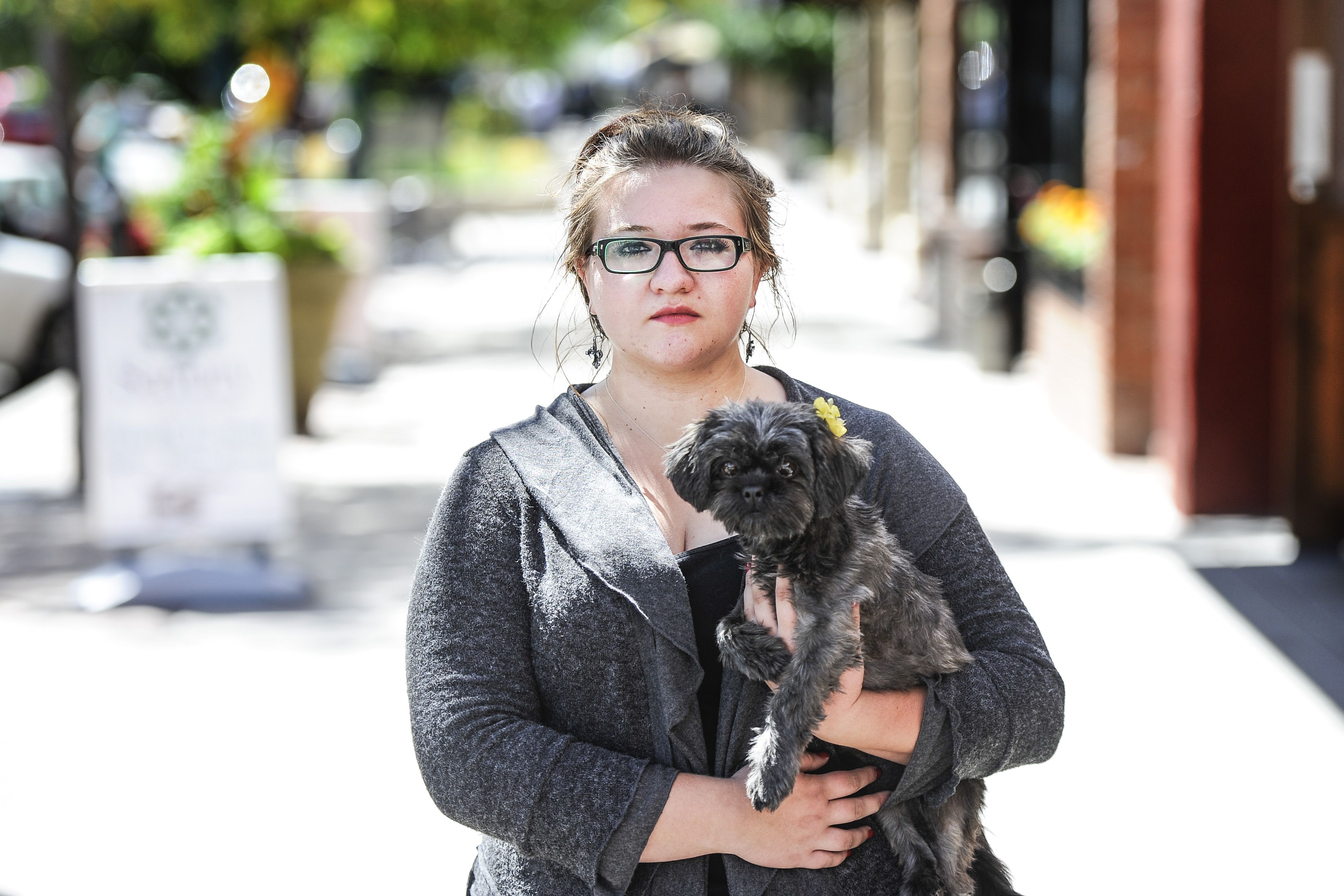
Andy Shinholt, a 17-year-old Palmer student, describes the underage drinking scene as “pretty bad.”
“Everyone is doing it more and more,” she said, adding that at a recent party, “everyone had it.”
“It’s just a typical kid thing to do,” she said. “It hasn’t gotten any better just because of this tragedy.”
Christensen, the Palmer High junior, said teens “don’t think they’ll get caught – and it doesn’t seem like enough kids do.”
Statewide, juvenile arrests for DUIs and other liquor violations have fallen by about 60 percent from 2004 to 2013, according to a Gazette analysis of law enforcement statistics reported to the Colorado Bureau of Investigation.
Locally, the number of violations given for liquor enforcement has dropped even more. From 2004 through 2013, the number of tickets written to juveniles for non-DUI liquor offenses decreased by 65 percent, according to data from agencies in El Paso and Teller counties. In the same period, the number of DUI tickets written by local agencies to juveniles dropped 60 percent. It’s unclear if the decline in violations by agencies is a reflection of a decline in alcohol use among teens or if the numbers show less emphasis on enforcement.
School districts and law enforcement take underage drinking seriously, the CSPD’s Walsh said, and hold minors accountable to academic and criminal discipline.
“We make sure the punishment equals the crime,” he said.
Underage drinking violations can result in tickets for possession and consumption, which thrusts minors into the court system and leads to actions for correcting their behavior. Minors who drink and drive can be subject to DUI convictions. At school, students can be suspended or expelled.
“You can’t ignore the issue, so you have to address it,” Walsh said. “Everybody has to make a personal choice of what they will do and what they won’t do. The best thing we can do is describe the consequence and hold them to it.”
Peers make a difference
For the past two years, Teen Court has had a 7 percent recidivism rate. The traditional juvenile justice system has a repeat offender rate of 40 to 50 percent, said Morgan Mote, assistant executive director of Teen Court.
There are a few reasons for the success, said English, the organization’s head.
In the drug and alcohol classes offenders usually must take, “We don’t hammer at them that alcohol is bad. We try to present information, like here’s what happens if you have a conviction on your record.”
But it’s the peer-to-peer interaction that’s most beneficial for kids caught possessing or drinking alcohol for the first time, English said.
“That’s absolutely what makes the program work. They hear it from adults and schools, but they don’t often hear it from people their own age,” she said. “When you have to sit before a group of people your age and say here’s what I did and here’s why, it gets their attention.”
Roney, the Palmer High senior and Teen Court volunteer, agrees.
“Most likely drinking happens around friends who want you to do it using negative peer pressure. For us, it’s positive peer pressure – you’re messing up, you’re going down the wrong path, but you can change.”
Teen Court volunteers ask offenders questions like how school is going, what else is happening in their lives, how they spend their time and then decide how offenders can take responsibility for their actions, repair the harm they caused and figure out how to make better choices. That might include writing a research paper, along with attending drug and alcohol classes and watching another Teen Court trial.
Several teens interviewed said their parents tell them to call for a ride, if they get into a situation where they need it.
Coates, the police officer from Fountain, said the most important tool parents have to keep their kids from alcohol is communication.
“Nowadays, there’s a lot of freedom for young adults, and parents and relatives need to remember the peer pressure these kids deal with today is much more severe than in the past,” Coates said. “We need to be there for the kids, able to intervene immediately, providing them with good and accurate information, and talking with them openly.”
At the Fountain party, Coates and his partners sat the 18 minors on the sidewalk and called their parents.
“We made sure every kid under 18 had a parent or an adult that would get them home safely and it took quite a while, but everyone was very calm,” Coates said. “The kids all knew they had done wrong, so they didn’t do anything to make the situation worse. And most of the parents were understandably angry, but they also thanked us for making sure everyone was safe.”
English believes one of the most effective prevention methods is getting kids to “think ahead, beyond ‘What I want this minute.’ ”
“If you get them to the point where they take a moment to think about the possible consequences of making a decision, you can help interrupt and stop the pattern.”
Lauren Agee, an Air Academy High senior and Teen Court volunteer, said she was good friends with Ryan, one of the victims of the recent crash. When she heard about the incident, she was surprised.
“It’s something you never think would happen to one of your good friends,” she said. “It’s not fun when it happens.”
Then, she felt angry.
“My friend made a choice, and he paid for it. I was angry he had to be killed for the mistake he made,” Agee said.
Jessica Chen, a senior at Rampart High School, said the other victim, Beau, was her math teacher’s son.
“She talked a lot about her son. I was surprised they were drinking and driving,” Chen said.
At Ryan’s memorial service, Agee said, “Everyone tried to make a point of celebrating Ryan’s life by not letting the same thing happen to anyone else, by making it cool to take away car keys and stick to their guns with drinking and driving.
“Because if one life is saved from this, their deaths won’t have been in vain.”
Palmer Ridge High School volleyball coach Taylor Tanner speaks about underage drinking and drinking and driving Tuesday, September 9, 2014 in light of the recent crash that killed two Palmer Ridge High School students. Michael Ciaglo, The Gazette
A rural high school student’s wrecked car is parked outside of Sand Creek High School Thursday, September 11, 2014 as part of efforts at the school to educate students about teen driver safety. The car from Drive Smart Colorado was brought to the school Thursday by Colorado Springs Police Officer Jason Reeser. Reeser, a school resource officer, said that this is homecoming week and he wanted to emphasize driving safety and the importance of taking care of your friends. Photo by Mark Reis, The Gazette
Colorado Springs Police Officer Jason Reeser watches as Sand Creek High School freshmen Brittanie Davies, left, and Merina Gerard try to walk a straight line wearing “Drunk Goggles” Thursday, September 11, 2014 at the school. The goggles simulate the impairment of a blood alchohol content of .12 to .20. Reeser, a school resource officer, said that this is homecoming week at the school and he wanted to emphasize driving safety and the importance of taking care of your friends. Photo by Mark Reis, The Gazette
Palmer High School senior Andy Shinholt speaks about drinking and driving Tuesday, September 9, 2014 in light of the recent crash that killed two Palmer Ridge High School students. Michael Ciaglo, The Gazette