






For plants to thrive, you’ll need to learn when and how to prune
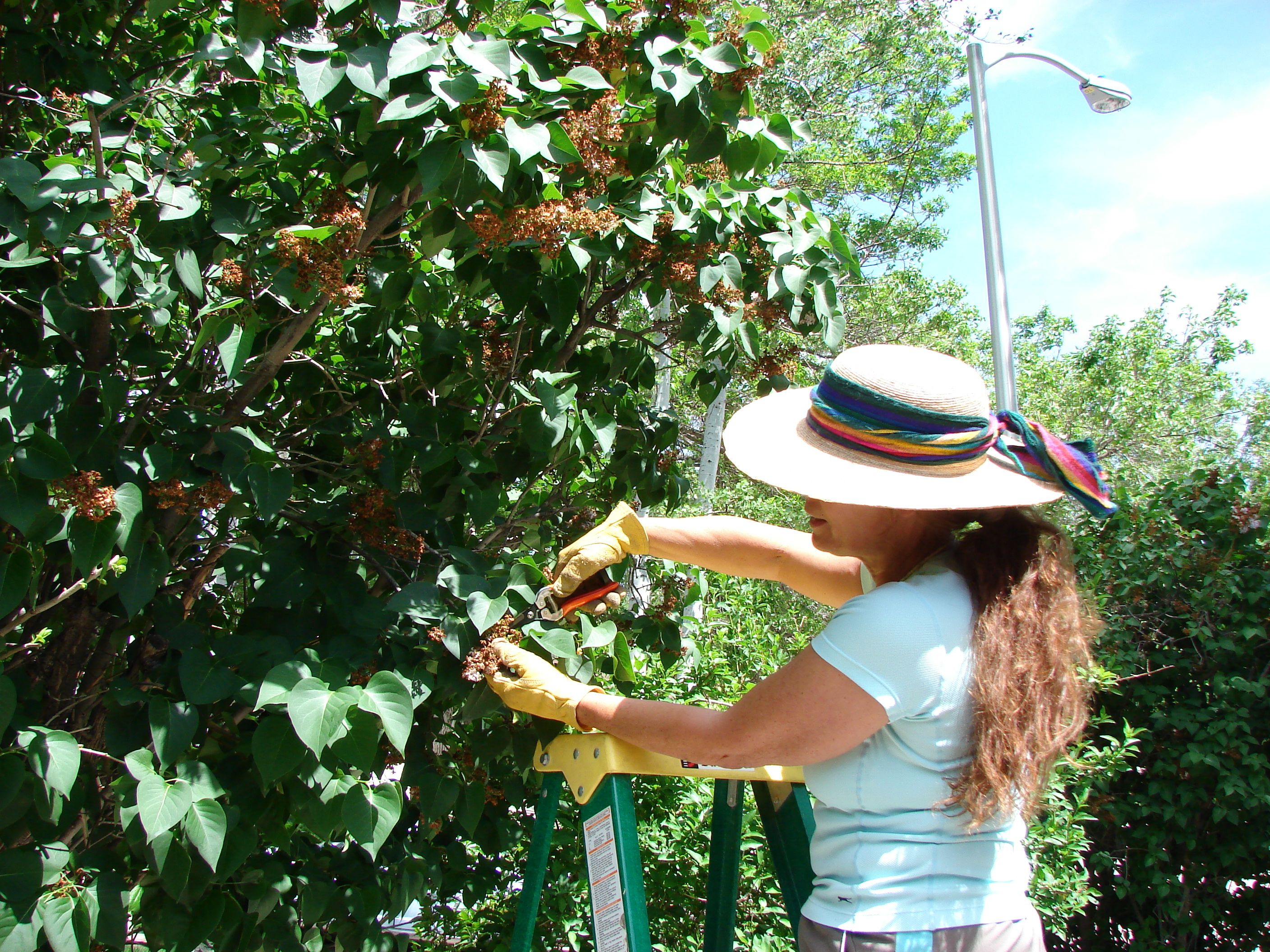
You’ve amended the soil, planted flowers and bushes you carefully selected for your location and then faithfully watered them. Now they are flourishing! This is the first great joy of gardening.
But for your plants to continue to survive and thrive, you will need to learn the art of fine-tuning by trimming. It’s important to know whether to leave those fading flowers on your plant and when to rein in a plant that is too exuberant.
When fading flowers are left on a shrub, perennial or annual, they turn into seed. Reproduction, and especially seed production, triggers chemical changes in the plant that can deter further blooming. The energy required to “go to seed” can either trigger dormancy or production of storage organs for overwintering.
Using pruning scissors, you can prevent this change in performance by “deadheading.”
Deadheading, a rather unsavory term, is simply removing spent flowers. Cut back to the base of the stem, removing the flower stalk and the blooms.
Because the following plants are common in gardens around the Pikes Peak region, here are recommended pruning practices for keeping them looking their best:
Trim shrubs that bloom in spring soon after blooms fade. This includes lilacs, Nanking cherry, viburnum and forsythia. Pruning in fall is not recommended, as it will remove flower buds that are next season’s blooms.
Roses and pyracantha, both woody plants, can be deadheaded to encourage more blooms. However, with both these plants, the production of ornamental fruits such as berries is often desirable. If that is the case, the spent flower blooms should not be removed. These often provide winter interest and food for wildlife.
Summer-flowering shrubs – like the butterfly bush, blue mist spirea or our native potentilla – should be trimmed in early spring, just as new growth begins to emerge. Use a sturdy pair of pruning shears and cut off the twig just above the emerging new growth. Cutting back to this degree produces a plant that is more dense and sturdy. Flower buds are produced on new growth, so the more growth, the more blooms. Potentillas and spireas respond especially well to annual trimming.
As for perennials, cut back flowers to the main stem when blooms fade. Mound-forming perennials can be sheared to within 3 to 5 inches of the crown if they become leggy in midseason. Afterward, they will produce new foliage and possibly a second set of blooms.
Some perennials that bloom later in the summer and into the fall do not need to be cut. If left to dry out in the garden, they hold their stature during the winter, providing “winter interest” when their skeletons collect snow. The dead plants need to be trimmed back in early spring.
Most annuals bloom continuously, over long periods, during the summer. Annuals are often used in high-profile containers and beds, making grooming a recommended task for the very best performance and appearance. Annuals will produce more blooms and appear fresher when they are groomed and deadheaded.
In the cool hours of the morning, armed with a pair of scissors and a pail to collect the clippings, wander through your garden and groom your perennials, annuals and blooming shrubs to keep the glory going as long as possible. Don’t forget to take time to enjoy what you have grown. Fill a vase for yourself or a friend and share the bounty.
–
Get answers to your horticulture questions by calling a Master Gardener volunteer from Colorado State University Extension at 520-7684 or emailing CSUmg2@elpasoco.com.