






Steps ranging from simple to high-tech can help keep you cozy
As temperatures drop and daylight is in shorter supply, we fight back: We crank up the heat in our homes and turn on lights earlier and earlier. And yet we also want to keep our heating and electric bills as low as we can.
Can you keep your home warm and inviting all winter while still conserving energy?
Here, two home design experts offer advice on how to keep things cozy while minimizing energy use this winter. Their suggestions range from the traditional (there’s a reason why your grandmother hung those heavy curtains in winter) to the high-tech, including a thermostat that can talk to your iPad.
Try new tech
Maxwell Ryan, founder of the popular home d?or website ApartmentTherapy.com, is a designer. John Colaneri, co-host of HGTV’s “Kitchen Cousins,” is a construction expert who builds and remodels homes.
Both offer identical pieces of advice about staying warm while conserving power and saving money: Swap out your old incandescent bulbs (and those swirly compact fluorescent bulbs, too) for the new Cree brand LED bulbs.
“They can last longer than 10 years and they use 84 percent less energy than incandescents,” Ryan says. “They also are dimmable” and give a warm-looking light – a big change from the energy-saving compact fluorescents.
“If you do the math on the LED,” he says, the bulbs save you so much on electricity that they pay for themselves within a year and then last about nine more years.
Colaneri and Ryan also both advise homeowners to replace old thermostats with new Nest brand models. “They take 30 percent off your bill each month,” Colaneri says. “And they look very high-tech and cool to display.”
Nests are programmable “learning thermostats,” which means they track your habits and adjust accordingly. They also connect via Wi-Fi to check weather reports online, and you can control them remotely from an iPad.
Embrace upholstery
Warm, cozy upholstery fabrics work on a practical level by holding your warmth when you touch or sit on them. Ryan points out that they also work visually: A room full of soft, warm fabrics will give you a psychological sense of warmth.
So add thick throw blankets to chairs and sofas, and swap out silk-covered pillows and even lampshades for ones covered in thicker, nubbier fabrics like muslin and burlap.
Ryan also recommends using thick curtains in winter. A decade ago, he says, “curtains were considered fusty and old-fashioned and expensive.” But with so many beautiful, inexpensive curtains available today, they’ve become popular again.
Lay down rugs
Gleaming hardwood or tile floors are lovely in spring and summer. But in cold weather, add a thick rug or swap out a thin one for something heavier. This will not only warm your feet, but also change the look and sound of your space.
“When acoustics are dampened,” Ryan says, “the room feels warmer.”
Designer Brian PatrickFlynn keeps sculptural outdoor heaters standing by his covered outdoor living and dining spaces. Should the weather become cold, these easily wheel back and, bringing the proper amount of heat wherever it’s needed. Once lit with enclosed propane tanks, not only do the heaters keep guests warm, but the heaters themselves also take on an artistic presence, adding to Flynn’s decor of the space.
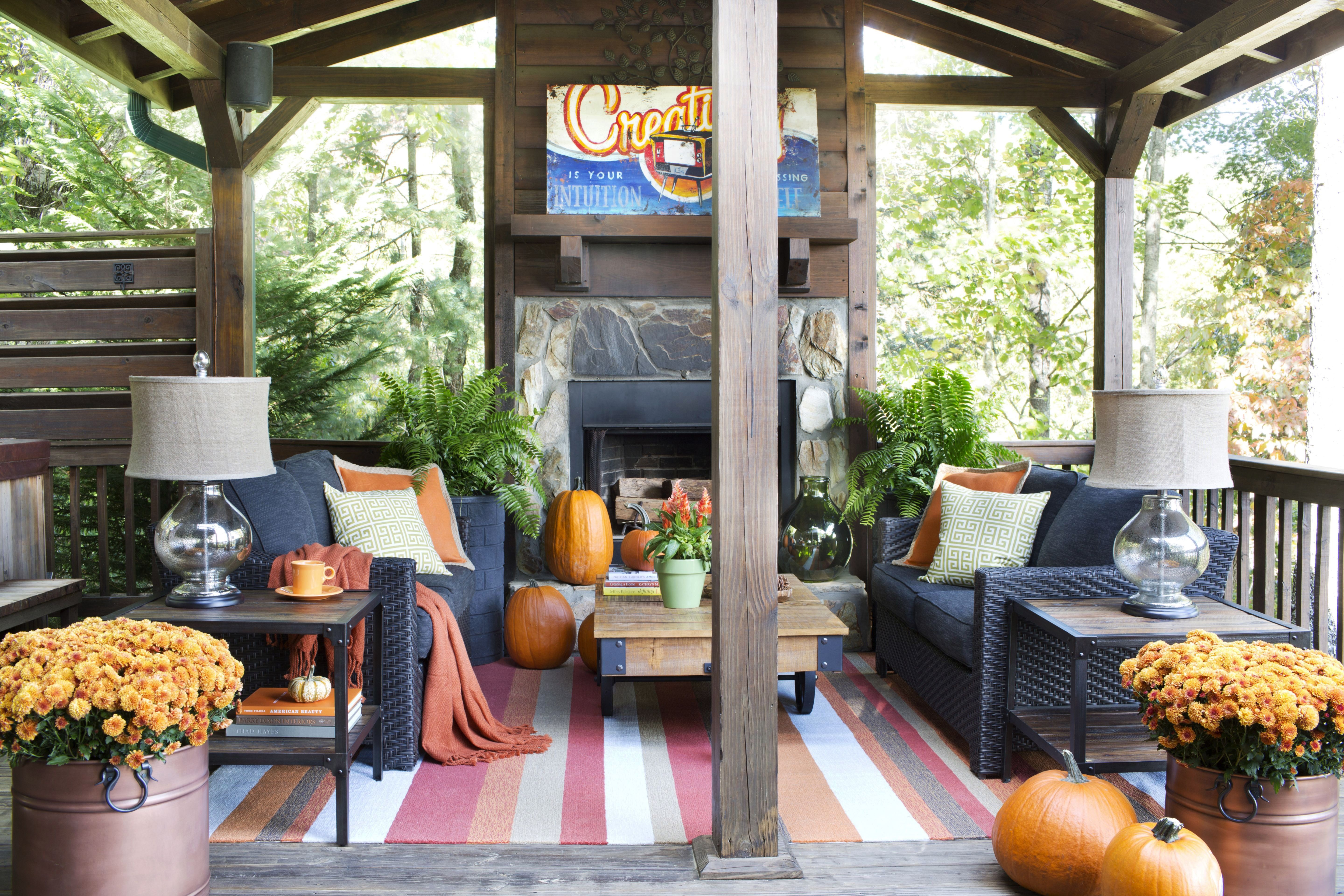
To ensure the outdoor living space of his mountain house stays warm and welcoming during the colder months, designer Brian Patrick Flynn chose woven blend upholstery for his seating, a wool and acrylic blend indoor-outdoor area rug, and throw pillows and blankets to keep guests feeling cozy. The wood burning fireplace is energy efficient and will still keep the area warm should electricity be lost during ice storms or snow storms.