






Window boxes are small raised-bed gardens
Sometimes the best view isn’t what you see through a window but what catches your eye underneath it.
Window boxes deliver color, edibles and fragrance. They’re practical, too, as raised-bed gardens that elevate contents to within easy reach.
“Window boxes are convenient containers,” said David Trinklein, a horticulturist with University of Missouri Extension. “Plant them with herbs, for example, and you won’t have to go outside to bring in the harvest.”
If you have room for a window box, you have room for a garden. Window boxes are ideal for small, shallow-rooted plants like radishes, lettuce, marigolds, impatiens, pansies, begonias, parsley, basil, sage and thyme.
“Mix and match flowers with vegetables,” said Rhonda Ferree, an extension educator with the University of Illinois. “They need the same soil types and have the same water preferences. Plant flowers toward the front for curb appeal; position vegetables toward the back for easier access.”
The location of the window box usually dictates what you can grow, Trinklein said. “Window boxes that get a blistering afternoon sun require one thing. Window boxes in shade require another.”
Fern Richardson, author of “Small Space Container Gardens” (Timber Press, 2012) say she’s “a big believer in creative window boxing.”
“There’s nothing stopping window box gardeners from adding garden ornaments to their boxes,” Richardson said. “Small gazing balls tucked between the plants can add a little sparkle to a shady area. Gardeners can even use short shepherd’s hooks to plant a hummingbird feeder in a window box.”
Window boxes work especially well:
– As theme gardens. Find flowers that display your school colors, patriotic mixtures that show the flag or plants that complement the paint on your house.
– At delivering fragrances. Fill window boxes outside bedrooms with evening primrose, four o’clocks (Mirabilis) and moonflowers for perfume-like scents on still summer nights.
– For four-season gardening. Grow daffodils, grape hyacinth and tulips in spring; ornamental edibles like peppers, strawberries and chives in summer; flowering kale and pansies for color through fall and winter.
– To showcase houseplants. Display your favorite potted plants in empty window boxes during the summer growing season. That will free up some shelf space indoors while enhancing things outdoors.
“Window boxes will need tending maybe three times a week, but that’s a small price to pay for what they add in the way of attractiveness to the home,” Trinklein said.
This undated publicity photo provided by publisher is Ten Speed Press shows the cover of Deborah Madison’s cookbook, “Vegetable Literacy,” published by Ten Speed Press.
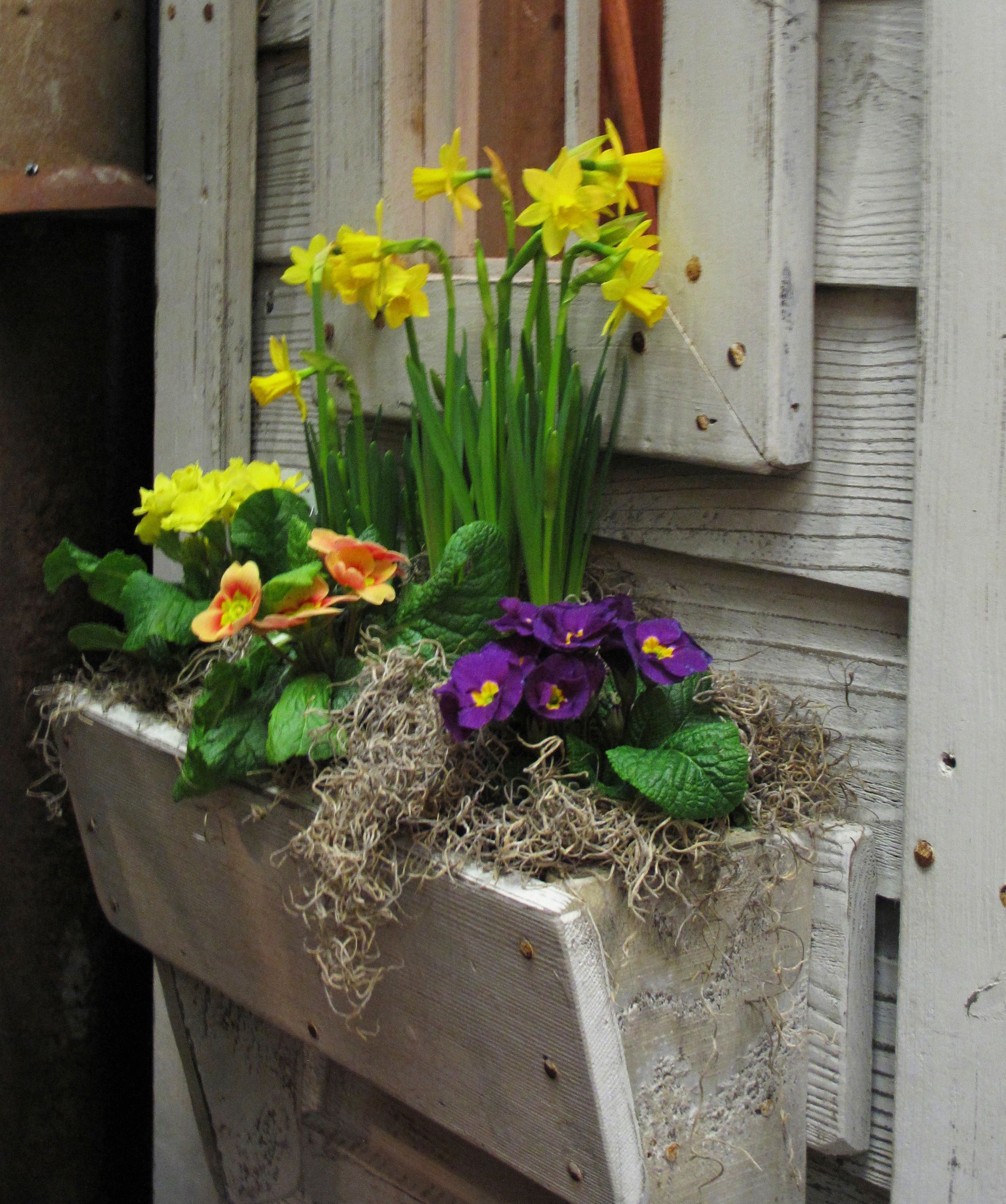
This February 19, 2013 photo shows primroses and daffodils sprucing up a simple window box on an outbuilding display at a recent Northwest Flower and Garden Show in Seattle. Window boxes make practical raised bed gardens — easy to reach from inside or out. It only takes a few shallow-rooted plants to provide window dressing for even the most rustic buildings. (AP Photo/Dean Fosdick)
This April 20, 2009 photo shows tall and small flowers that complement one another in this springtime window box assortment in Belgium. This homeowner in the Belgian countryside refreshes her plant selection with the change in seasons. Window boxes are convenient containers that provide color, deliver edibles and supply fragrances. (AP Photo/Dean Fosdick)