






Plenty to do, see at History Colorado Center
DENVER • The squeal of laughter in the lobby served as my first clue that the new History Colorado Center would be quite different from the old one.
My memory of the original was seeing a school group being hushed as they stared at glass cases full of arrowheads and muskets. The kids were clearly on a forced march through the halls of dates, names, artifacts and boredom.
These kids didn’t sound bored at all as they gathered in groups, pushing around “time machines,” nifty contraptions that looked like something out of H.G. Wells. The giant terrazzo floor displayed an image of Colorado, and when the kids moved over various spots and pushed buttons, their time machines showed them videos of what happened there.
“I’m still here,” a third-grader whined, clearly disappointed that it wasn’t a real time machine.
But the disappointment didn’t last long, as he and his friends pushed the time machine onto the Western Slope.
And that’s just the lobby.
The new History Colorado Center, which opened a year ago, is part of the new museum movement, dedicated to engaging kids about history more than showing them dates and artifacts.
“We wanted to create interactive experiences that make the visitor part of the story,” exhibits director Bill Convery said.
The story of the new museum begins with the expansion of the state judicial center into the area occupied by the old museum.
State officials decided to move History Colorado Center across the street from the Denver Art Museum in the center of what’s been dubbed the new Golden Triangle Museum District. Within walking distance, you’ll find the Denver Public Library, U.S. Mint, the Colorado Ballet, Ballet Arts Theatre, Byrers-Evans House and Acoma Center & Curious Theatre Company along with several galleries and restaurants.
For families, it’s not quite up to the Denver Zoo and the Denver Museum of Nature and Science in terms of a place to hang out all day. But it’s getting there.
The new $110 million History Colorado Center, funded by gambling taxes, certainly makes a nice companion to the Denver Art Museum. It still focuses on learning, but as Convery says, it’s more about experiences than facts and figures.
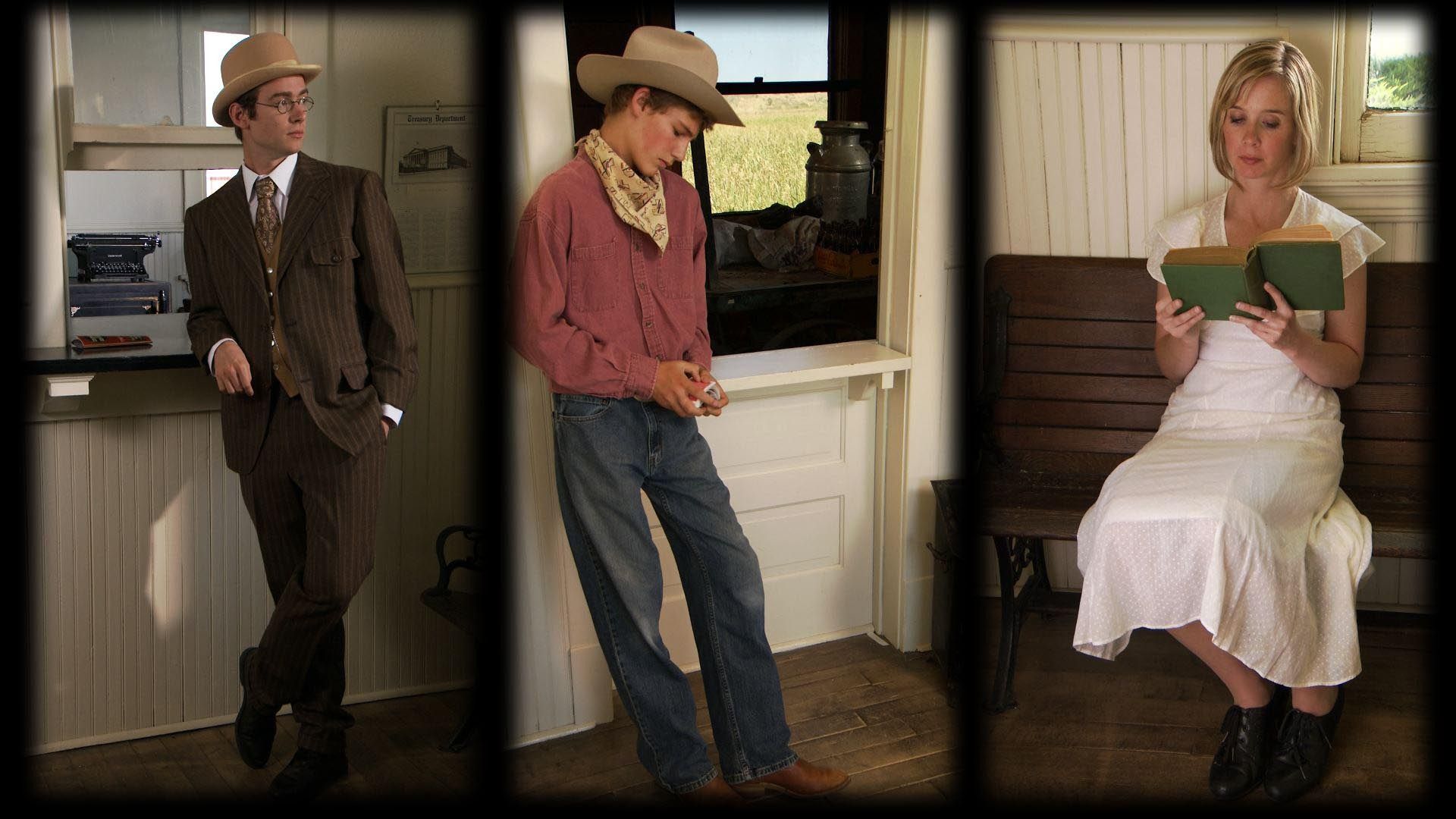
The kids I saw flitting about the exhibits certainly didn’t seem to be on a forced field trip. They were into it, particularly the part that explores Keota, a small Colorado prairie town in the 1920s. A 6-year-old girl sat behind the wheel of a Model T, her dad beside her, her mom and brother in the back seat.
The image on the screen in front of her made it look as if she were driving down a country road.
Meanwhile, other kids were milking the mechanical cow, grabbing eggs from the chicken coop and sorting them in the general store, and sliding down the corkscrew slide in the barn.
“OK, I know,” Convery said, smiling, as we toured the Keota exhibit. “It’s hardly authentic, but we do have stories about kids sliding off the barn roof.”
This re-creation of Keota, which is now nearly a ghost town, even features smells: bread baking, coffee brewing, leather, grass, manure.
“It’s about engaging them,” Convery said.
In other areas of the museum, kids and adults can stand on skis and enjoy virtual ski jumping at a re-creation of Carl Howelsen’s ski ramp in Steamboat Springs. They learn silly facts about Denver (including the origins of “South Park”) and try not to blow themselves up in a silver mine.
But the museum isn’t just about fun and games. Nor does it shy away from the darker corners of Colorado history. Visitors can walk into a re-creation of a Japanese internment camp (Amache) bunk house and experience an audio depiction of the Sand Creek Massacre.
It’s hard to walk though the latter, which features survivors’ descriptions of the horrors projected on a wavy scrim, without tearing up. It’s appropriately reverential and remarkably haunting.
The current exhibits represent the first two phases of the museum. A third phase, to open in 2015, will focus on our mountains and on Colorado during the Dust Bowl, with a virtual walk through a sandstorm.
This museum has come a long way from its humble, dusty origins. From April to December, it attracted more than 100,000 visitors.
“At the old museum, if you count people who just came in to use the bathroom and those who came thinking it was the Denver Public Library, we had 35,000 in a good year,” Convery said.
To Convery, the old museum is a stale memory he might one day visit in a time machine. But some things might be better lost to history.
Keota exhibit at History Colorado Center Photo by COURTESY PHOTO