






WALDO CANYON FIRE: City will reveal first after-action report Tuesday
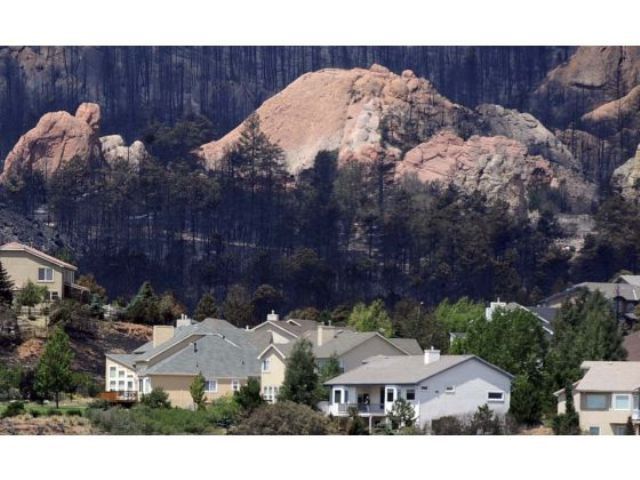
Nearly four months after the Waldo Canyon fire roared into Colorado Springs, the city’s first official after action report on the deadly blaze will be released Tuesday.
The city’s Communications Office said it’s only the initial after-action report. A full report will be released in the first quarter of 2013.
Members of Mayor Steve Bach’s executive team — Chief of Staff Laura Neumann, Fire Chief Rich Brown and Police Chief Pete Carey — will present the initial report during an 11 a.m. news conference at the City Administration Building, 30 S. Nevada Ave., Room 102. Bach is also scheduled to attend, city spokeswoman Julie Smith said Friday. Colorado Springs Fire Department Fire Marshal Brett Lacey will also be present.
After action reports are assessments of an agency’s performance during any event, whether it be a car crash or a large-scale disaster like the Waldo Canyon fire, which started on June 23. The blaze burned 18,247 acres, destroyed 346 homes, and killed two people. The first studies and after action reports of the fire have already started appearing, beginning with a home-burning study in July and including the city’s report to be released on Tuesday.
There is a long-standing history of the reports in the wildland firefighting community, in which devastating wildfires are typically followed by examination of failures and successes of fire crews battling flames. The Wildland Lessons Learned Center, based in Arizona, keeps a regular log of reports generated by wildfire-related accidents or deaths. For instance, the report for the 2010 Four Mile Canyon fire was released this July, and appeared on the center’s website, joined by a study of the 2002 Hayman fire.
For local fire crews, the Waldo Canyon fire, which surpassed Hayman in destruction, will soon surpass Hayman as a lessons-learned and training device, as well. The first studies and after-action reports of the fire have been compiled by national and local agencies alike, some of which could be made public by early November. Nearly every agency involved in the Waldo Canyon fire will compile an after action report.
On July 7, the Great Basin Incident Management Team, that oversaw the fire for weeks, prepared the first analysis on how homes burned.
The team also put together a summary of operations during the fire, with copies given to El Paso County commissioners in July. Paul Broyles, the deputy incident commander for the fire, said on Friday that no other after-action reports from the team have been released.
He did pass on an article that appeared in the September-October issue of the National Fire Protection Association Journal, “After Waldo Canyon,” a study of how fire mitigation worked.
In August, the Colorado Springs Fire Department compiled “stop-start-continue” lists of actions during the Waldo Canyon fire — citing practices that should continue, start, or stop, according to firefighters. Detailed internal reports of the department’s fire actions likely won’t be released until 2013, sources say.
Also in August, the E911 Authority, which runs the El Paso and Teller Counties 911 system, ordered an examination of their Emergency Notification System, which failed to send thousands of calls on June 26 when Waldo destroyed hundreds of homes. By early October, that report had been completed and it will likely be made public around Nov. 1, spokesman Ben Bills said last week.
In September, local American Red Cross volunteers sat down to discuss their performance during the fire — and determined that they need to improve their communication skills, volunteer Tony De Lago said last month.
The need for analysis has also been brought up at the national level by Colorado’s Democratic U.S. Sen. Mark Udall, who hosted an after-action discussion with local military officials in August. They discussed the use of air attack strategy during the Waldo Canyon fire.
On Oct. 11, Udall and Sen. Michael Bennet sent a letter to federal Agriculture Secretary Tom Vilsack, asking the department to launch studies into the Waldo Canyon and High Park fires, spanning everything from forest health to rebuilding concerns.
Photo by