






REVIEW: ‘Glass Menagerie’ is solid, if a bit too comfortable
If there was a Top 10 of classic American theater, you’d have to think Tennessee Williams’ “The Glass Menagerie” would find a place there.
The play, which premiered on Broadway in 1945, is iconic, not only of Williams’ psychologically steeped oeuvre, but of that rich, hard-edged era of Arthur Miller, Clifford Odets, William Inge and many others.
TheatreWorks takes on Williams’ “memory play” as the opening sally of its 2012-13 season. It runs through Sept. 30.
Director Anna Brenner offers a focused production with solid performances from every member of the cast. Elizabeth Atkinson’s sound was delicate and complex, a significant addition to the experience of the play. And set designer Julia Przetmojska created an interesting glimpse into the Wingfield’s sad capsule of an apartment.
And while the audience obviously enjoyed Brenner’s take on the play, I found it disappointingly toothless.
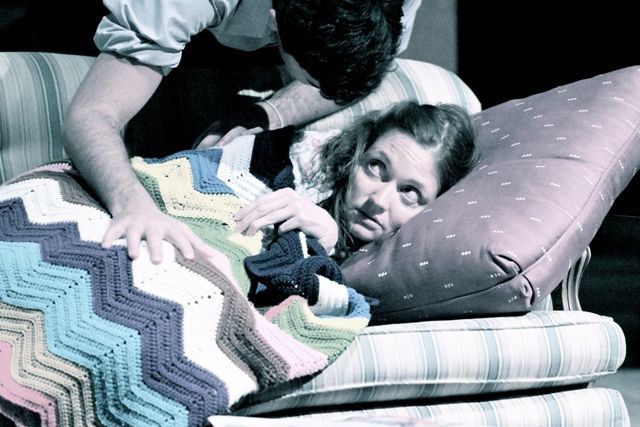
It begins magically with a restless Tom Wingfield (Ryan Reilly), who sets the stage for the play to come. There, Laura (Melissa D. Brown) hides from real life in the family’s apartment on the shady side of town. She is crippled — perhaps more emotionally than physically — and unable to connect with anyone besides her family, her absent father’s romantic old records and the delicate glass animal figurinesshe collects. Her mother, Amanda (Jane Fromme), is a faded Southern belle, who waxes on about her romantic triumphs in between nagging Laura and Tom to make her proud.
Often played for gauzy sentiment and good old Southern lyricism, “The Glass Menagerie” is really a much tougher piece of business. It navigates the crushing disappointments, unspoken truth and blind hope of a family ready to break apart. Done right, you feel that there’s a lot at stake, a lot to lose.
Brenner’s Wingfields are a little easier: Quirky people trying to make the most of a bad situation. Sadly, that softening keeps you at a comfortable distance, as if you’re just watching a particularly dark TV sitcom. Something’s going on here, but not to worry, it’ll work its way out.
Brown is certainly a creditable Laura, although one with more gumption than you’d expect in this role. Her saucerlike eyes threaten to drink in the stage, and she scurries about as iflik she’s trying to tag an ever-moving home base. Her journey from elation to annihilation in the final act was quite moving.
Reilly’s Tom is alternately vulnerable, disappointed and seething with desire for something more. Although Tom works in a factory to support his family, he yearns for adventure, an oddly antique notion that senseless wars and down economies have just about made extinct. Reilly has the appealing air of Hollywood actor Mark Ruffalo, and he delivers his character’s central conflicts convincingly. He practically vibrates with his character’s fierce desire.Philip Guerette, who plays the Gentleman Caller, is charming, less Dale Carnegie than I’ve seen before. I liked that. Guerette crafted a multilayered character that demanded a name and not a label.
Fromme, who lately starred in TheatreWorks’ “Mary Stewart,”conjures Amanda’s finger-wagging disapproval and love with skill. But her Amanda lacks the character’s complex and often distasteful emotional center, which is a key driver in this challenging playIs this gentler version bad? No, not bad. It’s just less. And that’s a loss.
Melissa D. Brown plays the fragile Laura in “The Glass Menagerie.” Photo by
Ryan Reilly and Jane Fromme in the TheatreWorks’ production of the Tennessee Williams’ classic. Photo by