






Safety tech: More inflatable belts on the way
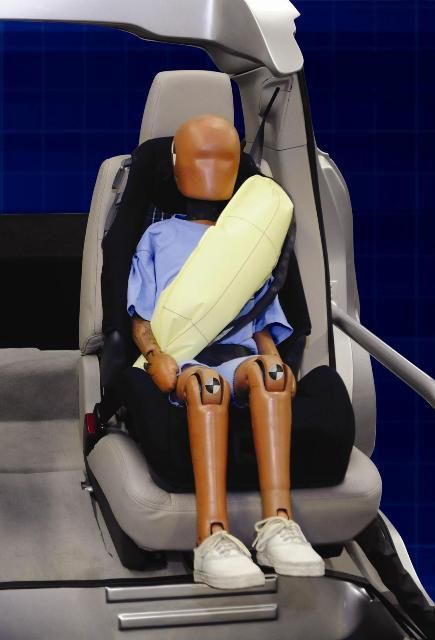
Ford, which introduced the auto industry’s first production rear inflatable seat belts on the 2011 Ford Explorer, will expand the safety devices to the Ford Flex and Lincoln vehicles set to arrive in dealer showrooms in summer 2012. The company intends to offer the safety feature on all its vehicles over time.
The devices combine the benefits of traditional seat belts and air bags. The system is designed to help reduce head neck and chest injuries for rear-seat passengers, often children and older passengers who tend to be especially vulnerable to such injuries.
Some 40 percent of Explorer buyers are parents who order the rear inflatable belts, says Amy Marentic, a Ford marketing manager.
The belts contain safety sensors that determine the severity of a collision and deploy the protection devices. Each tubular air bag inflates and breaks through the belt fabric, expanding sideways across a passenger’s body.
“Ford is pioneering inflatable seat belt technology to help enhance crash safety protection, while encouraging more people to buckle up with a more comfortable belt,” says Ford spokesman Paul Mascarenas.
In the 1970s, Chrysler and Calspan, a science and technology company, developed a car that used inflatable seat belts. The car was a part of the Research Safety Vehicle Program, which saw the building and testing of 60 vehicles under the Department of Transportation. The vehicles in the program were experimental and designed to be the safest and most fuel-efficient ever built.
Despite initial attention, the original inflatable seat belts were soon overshadowed by air bags, and never went into mass production.
Photo by CTW Features