






Slow burn: Right grilling strategy can coax deep flavor from even big cuts of meat
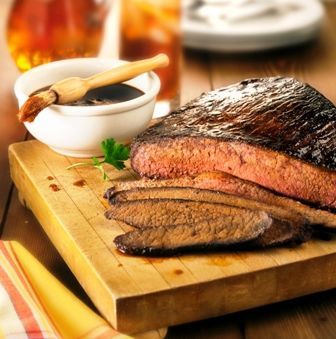
Grilling is high and fast, barbecuing is low and slow, or so the old saw goes about the differences between these two outdoor cooking styles. But grilling can also mean low temperatures and slow cooking times if you plan and grill-roast accordingly.
You should think about grill-roasting because you can. The greatest invention in grilling is the lid,” says David Joachim, co-author of “Fire It Up! More Than 400 Recipes for Grilling Everything,” published by Chronicle, with Andrew Schloss, a fellow Pennsylvanian, food writer and cookbook author.
Joachim is right. Grilling gives terrific flavor and can speedily cook small items of food.
Big items, however, are problematic without a lid to trap the heat. The grill essentially becomes an oven, he notes, allowing you to use indirect heat — cooking away from hot coals or gas jets — to cook the food slowly to a perfect doneness.
When it comes to big cuts, such as beef brisket, pork shoulder or leg of lamb, you have to let them cook until they’re fork-tender, Joachim says.
Little or no special equipment is needed: Disposable aluminum pans to capture juices released while cooking (boil down to make a sauce) and a brush or baster with which to apply a flavorful mop (or grilling sauce) while the meat cooks. That’s it.
In the recipe here, coffee is the surprising flavor agent for beef brisket. “It’s such a powerful combination,” Joachim says.
While you can get great coffee and beef flavor with almost any meat cut, Joachim thinks the pairing works particularly well with brisket because the cut boasts so much meaty, beefy flavor. Coffee bolsters that flavor at each crucial step: as a rub before grilling, a mop while cooking and a sauce for serving.
Gas or charcoal grill? It depends on you.
“Charcoal is not more difficult; it just takes a different kind of person,” Joachim says. “If you drive a stick shift car, you probably will like charcoal more. If you’re someone who just wants to turn a knob, gas is more convenient.”
GRILL-ROASTING TIPSDavid Joachim, co-author with Andrew Schloss of “Fire It Up!” offers these tips for grilling larger cuts of meat.
• Newbies to this kind of cooking might want to start with a pork shoulder because the meat is more forgiving and can be pulled or shredded before serving.
• Keep big meats moist. Brining or marinating before grilling and frequent basting during cooking keep meat from drying out.
• Spike brines or marinade with a little alcohol if possible. Booze helps the meat develop a more intense flavor while marinating. Joachim is not talking a lot of alcohol either: A couple of tablespoons in a couple of cups of marinade is all you need.
• If you use charcoal, go with briquettes rather than lump charcoal. Briquettes burn more slowly and evenly. Otherwise, be prepared to add lump charcoal to the grill more frequently.
ESPRESSO-POWERED BARBECUE BRISKET—Yield: 6 servings
ESPRESSO RUB2 tablespoons each finely ground dark-roast coffee, smoked paprika, dark brown sugar, coarse salt and ground black pepper1 tablespoon each ground ancho chili and finely grated lemon zest
ESPRESSO GRILLING SAUCE1 cup each brewed dark-roast coffee and ketchup1/4 cup dark brown mustard3 cups honey2 tablespoons citrus juice (lemon, orange or lime)2 tablespoons hot pepper sauce2 teaspoons each ground black pepper and coarse salt
BRISKETJuice of 2 lemons2 cups strong brewed coffee, preferably espresso roast1/4 cup molasses2 tablespoons aged balsamic vinegar2 teaspoons coarse salt3/4 cup espresso rub, divided1 flat or center-cut beef brisket (3-4 pounds), trimmed, with 1/4-inch fat on one side
Procedure:1. For Espresso Rub, combine ingredients in bowl and mix well.2. For Espresso Grilling Sauce, place all ingredients in saucepan and heat to boiling. Lower heat and simmer until slightly thickened, about 5 minutes. Refrigerate in tightly closed container up to 1 month (makes 21/3 cups.3. For the brisket, mix lemon juice, coffee, molasses, balsamic vinegar, salt and 1 tablespoon espresso rub in small bowl. Set this espresso mop aside. Rub remaining espresso rub all over brisket. Cover tightly with plastic wrap; refrigerate at least 8 hours.4. Rest meat at room temperature before grilling, about 1 hour. Prepare grill for indirect, medium-low heat, about 250 degrees. Coat grate with oil.5. Put brisket, fatty side up, on grill away from heat; cover grill. Cook until severely browned and blackened in spots, or very well-done (about 170 degrees on an instant-read thermometer), 4-6 hours total. Mop or drizzle brisket with espresso mop on both sides whenever surface looks dry, every 45 minutes during entire cooking time.6. After 2 hours of cooking, put brisket in aluminum foil pan, fatty side up; return brisket to grill away from heat. Cover grill; continue cooking. You need to mop only the top, fatty side of the brisket once the meat is in the pan. If your grill has a temperature gauge, it should stay at about 250 degrees during the entire cooking time. If using charcoal, add fresh coals about once an hour.7. Remove pan from heat; let rest 20 minutes. Trim any excess fat; slice brisket across the grain. Serve with the grilling sauce.
Adapted from “Fire It Up! — 400 Recipes for Grilling Everything,” by Andrew Schloss and David Joachim
CUBAN GRILLED PORK—Yield: 6 servings3 cups lime juice (about 14 limes)3 cups orange juice, (2-3 oranges)1 1/2 teaspoons ground cumin
1 1/2 teaspoons ground dried oregano1/2 teaspoons black pepper1 head garlic, cloves peeled1 (3-pound) pork loin1 teaspoon salt1 onion, sliced into rings
Procedure:1. Mix juices, cumin, oregano and pepper in bowl. Let sit 10 minutes.2. If using flavor injector, strain half the marinade into another bowl. Fill injector with strained marinade. Inject marinade into pork flesh. Do this all over the meat until strained marinade has been used up, or until meat can’t hold more liquid.3. If not using flavor injector, crush garlic and add to marinade. Use long, thin knife to create deep gashes all over pork flesh. Pour half the marinade over pork.4. Place pork in deep bowl or container. Generously season outside of pork with salt; pour remaining marinade all over meat. Spread onion rings over top. Cover well with plastic wrap; refrigerate at least 1 hour or up to 24 hours.5. Remove pork from marinade; place meat on platter. Transfer marinade to saucepan; add onions. Bring to boil; cook 2 minutes. Remove from heat; allow to cool. Puree in blender until smooth. Marinade is ready to be used as a basting liquid.6. Allow pork to come to room temperature. Heat gas grill to high (550 degrees); close lid. Wait at least 15 minutes before lowering heat to 400 degrees. Oil grill grates. Grill pork 60 minutes; turn over meat after 15 minutes, again at 30 minutes and at 45 minutes. Baste each time you turn meat.7. Pork is ready when it reaches an internal temperature of 150 degrees. Remove from grill; allow to rest 15 minutes before carving. (Meat temperature will rise an 10 degrees while it rests.)
“Latin Grilling — Recipes to Share from Patogonian Asado to Yucatecan Barbecue and More,” by Lourdes Castro
While you can get a great coffee and beef flavor with almost any meat, Joachim says the pairing works particularly well with brisket because the cut boasts so much meaty, beefy flavor. Photo by MCCLATCHY