






Sleep, water, toys help teens maximize brainpower
A couple dozen students attending a workshop Saturday were given squeeze balls and fidget toys and encouraged to take them to class every day, along with a water bottle.
And they likely will suggest to teachers that they and their classmates should stand up and laugh occasionally, especially just before tests.
While some teachers might recoil at the thought of such an anarchistic assault on classrooms, they should be thrilled.
These kids were learning to make the most of their brains.
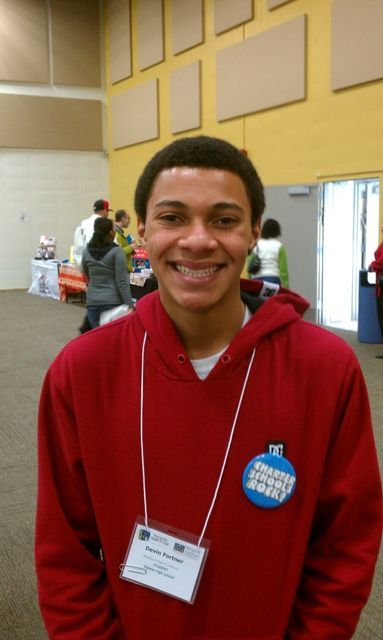
“I’m definitely taking back some of these ideas,” said Devin Fortner, a Palmer High School senior who was attending the “Maximizing Your Brainpower” workshop at the annual Educating Children of Color conference at the University of Colorado at Colorado Springs.
It was one of several workshops offered to students, parents and educators at the conference, which focuses on approaches to multicultural education. About 500 people attended Saturday’s sessions.
In the brainpower session, Kathy Stevens and Dakota Hoyt of the Colorado Springs-based Gurian Institute, dispelled many brain myths and provided tips for students to use while their brains continue to develop. The institute provides workshops for teachers and parents worldwide.
For example, Stevens said, the male brain can go to a physical “rest state” where the guy isn’t engaged in what’s going on around him. Sometimes, that’s okay, but “in class, that’s a bad thing,” she said.
Boys often fidget, such as tapping fingers or bouncing their leg, to keep their brain engaged, she said. Teachers and classmates, though, often find that annoying.
That’s why she suggested they keep a stress ball in their backpack that they can squeeze during lectures or class discussions where they’re supposed to sit still.
“I wish I’d known that in middle school,” Fortner said later, adding that he thought the two-day conference was something every student should attend.
Stevens said girls’ brains tend to develop faster, which may explain why they like older “more mature” boys.
But, Hoyt added, the female brain has an irritating “repeat button” that means girls don’t easily let go of things. “You’ve got to learn to let those negative thoughts go,” instead of running them through your mind over and over, she said.
Every minute, enough blood flows through the brain to fill three soda cans, Stevens said. So anything that restricts blood flow — caffeine, smoking — slows brain function.
Excess stress pushes the brain into survival mode, and reduces a person’s ability to take in and process information normally, she said.
Hoyt said there’s a lot of emphasis on maintaining a healthy heart and body, but very little on taking care of the brain.
Top remedies for keeping the brain working well include drinking plenty of water, movement and laughter.
Stevens suggested that teachers use a quick game of “Gotcha” before a classroom test to get students out of their chairs and laughing. (Students stand in a circle and try to grab the finger of the person next to them while avoid having their finger grabbed by the person on the other side.)
Stress goes down, test scores go up.
“Laughter relieves stress and makes us alert,” she said.
A good night’s sleep — for teenagers that means nine and a quarter hours — also helps keep the brain functioning at its highest levels.
Teens’ deepest sleep comes between the sixth and eighth hour, the time when the brain works the hardest to sort and store information it has taken in, Stevens said.
So if a student has trouble remembering class discussions from the previous few days, it could simply be a lack of sleep time for the brain to do the sorting. And, she said, trying to make up for things by sleeping until noon on the weekend doesn’t work.
The workshop participants, who were given squeeze balls at the outset and played a game of Gotcha, seemed to take in the information packed into the 90-minute session.
Now, if they just get enough sleep to process it.
Devin Fortner at Saturday’s Educating Children of Color conference at the University of Colorado at Colorado Springs. Photo by Courtesy of Devin Fortner