






REVIEW: ‘Let Me In’ remake bleeds original dry
GRADE: B+
Directed by: Matt Reeves
Starring: Kodi Smit-McPhee, Chloe Moretz, Richard Jenkins, Elias Koteas, Dylan Minnette
Rated R for strong bloody horror violence, language and a brief sexual situation.
Running Time: 115 minutes
Can something be both great and completely pointless? Because “Let Me In” is. The remake of the exceptional 2008 Nordic import “Let the Right One In” is redundant and unnecessary. But it isn’t bad. Far from it. Director Matt Reeves deserves much credit. Many critics and fans of the original film expected a cataclysmic interpretation. But as far as remakes go, “Let Me In” is as good as it gets. And yet, because it adds so little and merely reflects the brilliance of the original rather than propagating its own light, we must wonder why it was made in the first place.
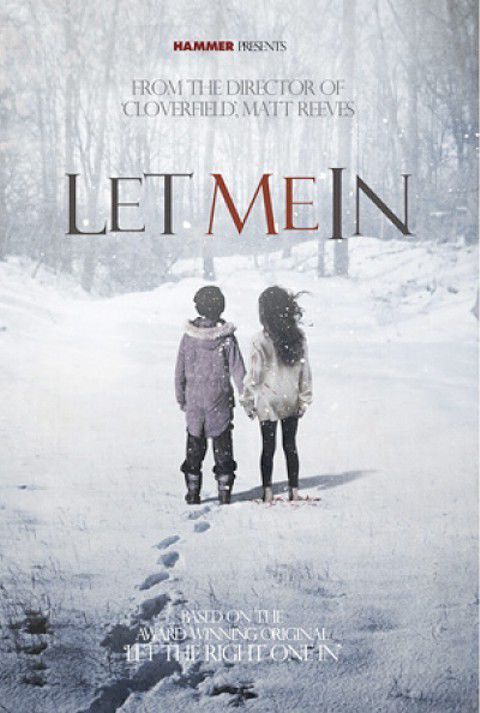
My original plot summary, taking into account the Americanized names, remains accurate: Owen (Kodi Smit-McPhee, perfectly cast) is a strange, friendless, 12-year-old boy who is regularly picked on by schoolyard sadists. While he creates vivid (and violent) revenge fantasies about getting even, he stands up for himself only in his make-believe world. Owen finds an ally in Abby (Chloe Moretz), a girl next door who encourages him to stand up for himself. They rendezvous nightly in the frigid courtyard of their apartment complex, he bundled against the cold and snow and she, clad only in the lightest of garments. The equally strange Abby becomes Owen’s friend, and in time, with all the halting stutter-steps of pre-pubescence, Owen comes to look upon her as his first love. But Abby is no ordinary girl. She is not, in the strictest sense, even human. Abby cannot abide sunlight, is capable of impossible physical feats and has a biological imperative to drink blood. Young Abby, you see, is a vampire.
“Let Me In” moves the action from Blackeberg, a suburb of Stockholm, to Roswell, New Mexico (given a setting renowned for UFOs, it’s a wonder anyone even noticed a vampire). The 80s timeframe, so important to the first film, slides effortlessly into the remake, and contains all the Ronald Reagan sound bites and Cold War paranoia compulsory to such a timeframe. While it blatantly duplicates, shot for shot, some of “Let the Right One In’s” moody imagery, the creative Reeves (who also wrote the screenplay) adds some nice embellishments of his own (as well as some admittedly pointless and distracting CGI). The director of the CGI-heavy monster movie “Cloverfield” doesn’t exactly square with the indie sensibilities of a story powered by subtly and nuance, but he manages to be genuinely creative while still maintaining an understated tone and distinctive style.
Reeves ups the film’s scare quotient, though not to a point that it actually becomes a true horror film. When Abby feeds, she is something to be genuinely feared. The boys’ choir in the background of the slow and pensive scenes gives way to a Gyorgy Ligetiesque accompaniment that makes this version even more dread-ful than the first. Reeves also understands the particular cultural nuances of the story as they apply to American audiences and injects a complimentary religious subtext and iconography.
“Let Me In” continues and in some cases even enhances the themes of gender subversion found in the first film and John Ajvide Lindqvist’s novel on which both versions are based, though it chickens out at the most crucial moment. To be fair, the first film did too, introducing but never resolving a major reveal.
“Let Me In” captures the fusion of two achingly lonely misfits while slightly expanding the backstory of Owen’s teenaged tormentors in a way that is organically illuminating without being over-explanatory. He isolates his protagonists, alienating them not only in the narrative, but on screen as well—we hear Owen’s father though we never see him; Owen’s mother is in numerous scenes, but we never see her face. This distances us from Owen’s protective umbrella and cuts him off him from defense even when he is not alone. Where Reeves improves on the original film is a more muscular role for Abby’s “father,” played here by the great Richard Jenkins. This time around, we understand far better—and are haunted by—his and Abby’s relationship, just as we are even more acutely aware of the role Owen is fated to play once the credits begin to role.
“Let Me In” is an exercise in pointlessness and redundancy. Yes, it is introducing a great story to an entirely new audience, but how many will stop there, satiated, with no compulsion to visit the film that started it all? Hollywood believes, and my experience confirms, that the majority of Americans steer clear of foreign films. Why? They don’t want to read subtitles. Rather than overcome elementary school phobias and downright laziness, most people relegate their viewing to a tiny sliver of the world’s countries that produce films in the English language. “Let the Right One In” reinvigorated the tired horror genre with a brilliant bolt of originality. But there is nothing original in “Let Me In.” Quite the contrary—this is an expert copy. Like those paintings of masterworks that fool all but the most trained eyes, “Let Me In” will pass as a good, perhaps even great forgery, but it is still, in the end, little more than counterfeit goods.
Photo by