






An interview with ‘Earthwork’ director Chris Ordal
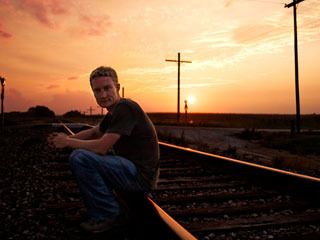
When Chris Ordal decided to become a film director, little did he dream it would involve breaking his back on a larger-than-life art project alongside noted crop artist Stan Herd in order to get his life story.
But that’s what he did, and the result is “Earthwork,” his powerfully moving debut film which premiered at the Austin Film Festival in 2009 and is currently making the rounds of the festival circuit.
One of the selections at this year’s Indie Spirit Film Festival, “Earthwork” will be shown 7:00pm, Saturday, April 24 and 2:15pm, Sunday, April 25 at Kimball’s Peak Three Theater, 115 E. Pikes Peak Ave.
Not only will Ordal be on hand to talk about his film, but the subject of the film, Stan Herd, will be there too. Q. Why did you want to become a director?
A. As a filmgoer, I am the most excited when I am surprised by a story, a performance, a juxtaposition; all of these are choices. The director doesn’t make all of these choices, but he gets to consider them all and shepherd them all into a final product. I see directing not as telling actors and crew how something should to be done, but to create the greatest possible environment for them to do whatever it is they need/want to do. If I succeed at that and the right talent has been hired, then I am guaranteed to be surprised as filmmaker. With any luck, I will make the right choices and surprise audiences in a way that enlightens and changes their perspective a bit. I think that’s what great filmmaking is all about. I guess it’s the thrill I get from great filmmaking that made me want to be a director. Directing takes a lot out of you, but the juice is definitely worth the squeeze.
Q. Why did you make this film?
A. I heard the story from a mutual friend of the real Stan Herd. I had known Stan casually and I knew that he was a crop artist and I was interested in his work and one day a friend of his said, “Hey, sometime have Stan tell you about the time he did an earthwork on land owned by Donald Trump with a bunch of homeless people” and it immediately clicked with me. I knew in my gut that there was something there and then I couldn’t stop thinking about it.
I started asking Stan a bunch of questions and kind of hanging out with him more and actually spent six months admittedly bothering him trying to find the actual story, the essence of what the story would be. I was doing everything from getting his life story, working on earthworks that he was currently doing so I could learn about his process and figure him out and one day after question after question he kind of started talking about his relationship with this one in particular homeless kid and how after this homeless kid who had helped him for months and months and months finally saw the image from above it brought him to tears. That’s when I knew what the story was.
Q. What was your biggest challenge in making this film?
A. Every film shares a lot of the same struggles, but the challenge that set Earthwork apart from other films is the fact that we were literally farming and filmmaking at the same time. Since our story takes place over months and months and our set was two acres of live crops, we spent a great deal of time and money just dealing with the fact that we had cast Mother Nature in a leading role. Take all of the factors (time, budget, scheduling, technology, etc.) that filmmakers deal with and compound those factors with all of the challenges that a farmer faces in taking their crops from seed to market. Keeping the crew hydrated is a must for any film, especially in Kansas during August, but our set drank more water than our crew ever could.
Since the majority of the story takes place in New York City, we built a huge wall in the middle of a field out of plywood, then painted it to look like cement, then brought in some graffiti artists to research early 90’s graffiti and cover the wall with tags and pieces. We matted New York City buildings above the wall and we had our world. The first time Stan Herd saw the scenes with the New York City skyline, he couldn’t believe how accurately we had portrayed the location he created his masterpiece in. The wall was a great tool, but my director of photography and I spent every day working to come up with camera angles that would keep the film visually stimulating while only able to aim the camera in one direction. It was extremely limiting. If we shot in any direction other than the wall, it was clear we were in the middle of Kansas and not New York City.
Q. What does it mean to you to have this film shown at a film festival like Indie Spirit?
A. To me, film festivals are just the greatest most wonderful thing in the world because it’s an opportunity for me to first of all share our story with people, which is the most important thing. But selfishly it’s an opportunity for me to experience the film the way films are best experienced, which is communally. A number of people together in a dark room, not just watching a movie but watching a movie and reading the energy of the people around them. And Earthwork is the kind of film that plays beautifully in a theatrical environment because there are real touching, honest cathartic moments. It’s amazing to hear people gasp and laugh and truly enjoy the story that we told.
Q. What do you hope to communicate to festival goers here, either about your film in particular or about independent film more generally?
A. I just hope people enjoy the film. I want them to leave the theater thinking about it and appreciating it and having enjoyed it and I want them to take that experience and hopefully they’ll want to have that same kind of experience over and over again. And whether it’s my film or someone else’s, they’ll go participate more in film festivals. It’s important that they not just go see movies, but that they seek out movies that may not have the marketing power that bigger films do.
Q. What would you tell someone who wanted to know why they should see this film?
A. This is just an unbelievable story and I have yet to meet a single person who wasn’t emotionally affected by the story we told. People of all ages have literally come up to me. People have cried, people have laughed.
We’ve played a number of festivals and every single Q&A we have we get kicked out of the theater because people are just so interested and passionate, whether it’s about the real artist or a part of the film or how we got it made. People are just ravenous with questions.
Photo by