






Pictures of soldier with gun worth life plus 140 years in prison
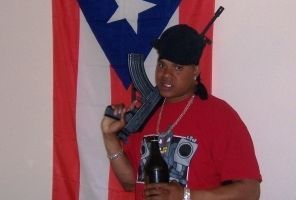
They say a picture is worth a thousand words.
In the case of a former Fort Carson soldier recently convicted in a double homicide, a set of pictures taken by a co-defendant were worth two life sentences plus 140 years in prison.
Jomar Falu-Vives, a 25-year-old Iraq War veteran, might still be a free man if not for a digital camera that a Colorado Springs patrol officer briefly examined during a traffic stop following a report of shots fired.
The camera contained images taken by Rudy Torres-Gandarilla, a fellow soldier and accomplice in a pair of drive-by shootings that left two people dead and one injured.
After the trial, the Gazette requested and recently obtained copies of the photographs, which are shown here for the first time in public outside of the courtroom.
This is a story about how these photographs proved pivotal to police and prosecutors in solving the case.
Two shootings, one gun
Investigators knew fairly quickly that the drive-by shootings on May 26 and June 6, 2008 were connected.
A ballistics exam of the high-velocity bullet fragments that shattered Army Lt. Zachary Szody’s left leg in the first shooting matched the slugs that killed Amairany Cervantes, 18, and Cesar Ramirez-Ibanez, 20, in the second attack.
Szody knew from his military experience that the weapon was likely capable of firing automatic rounds.
Cervantes’ sister Nataly, who witnessed the double murder, described seeing a dark-colored SUV with a group of Hispanic males inside.
Beyond that, police had relatively little to go on until the night of July 6, 2008, when some solid police work gave investigators a new set of leads.
That’s when a patrolman who had stopped a carload of suspects with a handgun in plain view, noticed the digital camera belonging to Torres. When the officer looked at the camera, he saw pictures of Falu-Vives at a target range holding his AK-47 with a dark SUV in the background.
The soldier as photographer
Rudy Torres took pictures of his friends wherever they would go.
He would take pictures at barbecues, parties, pool halls and brunch.
And he took pictures, lots of pictures, at the now closed South Rampart Range shooting range in the foothills west of Colorado Springs, where he and Falu-Vives and their fellow soldiers went for target practice.
The morning after the traffic stop, detective Brad Pratt, the lead investigator in the drive-by shootings, visited Torres at a recreational facility at Fort Carson asking to see his camera.
At first, Torres tried to hide his involvement in the shootings. It didn’t work. Pratt asked to download images that Torres had loaded onto another soldier’s computer. On it, Pratt found a video clip of Falu-Vives at the target range and images of him firing his AK-47.
Search for a murder weapon
Ernest Marquez, the defense attorney who represented Falu-Vives, would later tell jurors at trial that there was nothing unusual about soldiers carrying guns.
Nor was it unusual that they would pose with their weapons. Soldiers have been posing with guns for a long time, since there have been soldiers, he said.
But this particular weapon that Falu-Vives held was of interest to investigators. So on July 18, 2008, Pratt went to knock on a door of the apartment at 1876 Ralph Ridge where Falu-Vives lived.
No one was home, but the detective said he noticed the window to the apartment was broken. Pratt called Falu-Vives, reaching him in Texas.
The detective, who identified himself simply as a police officer, told Falu-Vives about the broken window and got his permission to search the apartment in case there had been a break-in.
Inside, Pratt saw the AK-47 on a shelf in a closet. He called Falu-Vives back to report that his belongings were still there. Then the detective asked for permission to examine the gun.
No Falu-Vives replied. He instructed Pratt to leave the gun there and that he would be back the next day.
But by then Pratt had enough to obtain a search warrant for the apartment. And when the search was done, police had found the murder weapon.
Who pulled the trigger?
Near the end of the trial, defense attorneys conceded what the ballistics tests showed: that Falu-Vives’ AK-47 was the murder weapon. They argued, however, that somebody else pulled the trigger.
The jury rejected that defense and found Falu-Vives guilty on all counts on Nov. 18.
The next day, 4th Judicial District Judge Thomas Kennedy imposed two life sentences on Falu-Vives plus 140 years. The conviction is being appealed.
After the verdict, Chief Deputy District Attorney Diana K. May acknowledged the importance of the photographs.
Without them, she said Falu-Vives probably would have been re-deployed to Iraq. If that had happened, police likely would not have recovered the murder weapon. And without the gun, chances are that the two drive-by shootings still would be unsolved.
For more on this case, go to the Sidebar blog at Gazette.com
Jomar Falu-Vives with automatic weapon Photo by
Photo by
Jomar Falu-Vives aiming a rifle Photo by
