






Director captures passion of poet’s life
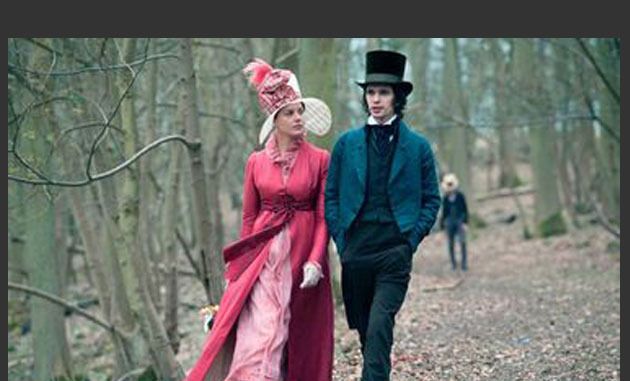
“Bright Star” is the work of Jane Campion, the director of the Academy Award-nominated “The Piano,” a beautiful film that nevertheless left me cold and unaffected. There was no such effect this time.
“Bright Star” is a dazzling film and one of the most engrossing love stories in recent memory. In 1993, Campion became only the second woman in history to be nominated for a Best Director Oscar. History just may repeat itself next March.
“Bright Star” is based on the final years of the Romantic poet John Keats (Ben Whishaw) and his love affair with the girl next door, Fanny Brawne (Abbie Cornish). The year is 1818 and the 23-year-old poet is penniless. He gets by on the kindness of his friends, particularly the disagreeable Mr. Brown (Paul Schneider).
When Keats and Fanny first meet, they don’t think very highly of each other (and she thinks even less of Mr. Brown). But when Keats’ younger brother falls ill, a victim of the dreaded disease tuberculosis, the two acquaintances find themselves drawn together.
Secretly, they began a passionate love affair, consummated only in hungry glances, stolen kisses and passionate letters. By the time those around them realize the woman of some means is attached to the ragamuffin poet without two cents to rub together, it is too late — their love only increases in direct proportion to the troubles they face.
But there is one obstacle even their passion cannot withstand.
These sorts of period films are usually bled dry of emotion, as if the filmmakers assumed that a buttoned-up society indicated an absence of genuine human feeling.
But Campion understands that the greater the societal stoicism, the more fiery the emotions that bubble just beneath the surface.
Her characters are vivacious creatures, bursting with life. A scene in which the two leads place their hands on the bedroom wall that separates them is infinitely more passionate than any sex scene could ever be. Though there is something quite naive and juvenile about the couple’s affections, it is that very thing that makes it so pure and innocent.
Whishaw (“I’m Not There,” “Brideshead Revisited”) continues to prove that those who dubbed him one of the finest actors of his generation knew exactly what they were talking about. A frequent visitor to period pieces such as this, Whishaw, like his character in “Bright Star,” has a certain brooding drabness that masks a radiant lightness of being. His co-star Cornish (“Stop-Loss,” “Elizabeth: The Golden Age”) is quite simply angelic. Cornish’s Fanny has a forthright mettle, much like the Jane Austen heroine Elizabeth Bennet, though she is simultaneously startlingly vulnerable.
This is the sort of role Kate Winslet would have filled a decade or so ago, but the screen is not lacking for her absence. Cornish is impeccable as a fiery flirt, a doting lover and, when she loses her soul mate, a woman whose grief is Titanic and unquenchable.
From top to bottom, “Bright Star’s” crew deserves praise. Campion, who wrote the screenplay, channels Austen in both tone and vigor, perfectly capturing the voice of Regency England. Keats’ poems are spoken aloud throughout the film, allowing his voice and words to seep into every nook and cranny of our experience (stay through the end of the credits to luxuriate in Whishaw’s reading of “Ode to a Nightingale”). Greig Fraser’s luminous cinematography evokes painter Johannes Vermeer; Mark Bradshaw’s plaintive, melancholy score stirs our heart strings; and Janet Patterson, who handled the exquisite sets and the rapturous costume design, takes us back in time.
It would have been so easy for Campion to let herself be carried away by the material, as so often happens in films set among aristocratic accents and patrician attire.
But Campion instead shows remarkable restraint, allowing our focus to synchronize not with the opulent outward world but with the characters’ heartbreakingly passionate and deeply emotional inward world.
The result is one of the finest films about the life of an artist ever made.
Bright Star
Cast: Abbie Cornish, Ben Whishaw, Paul Schneider
Director: Jane Campion
Theater: Kimball’s
Rated: PG (for thematic elements, some sensuality, brief language and incidental smoking)
Running time: 1 hour, 55 minutes
GRADE: A
Abbie Cornish as Fanny Brawne and Ben Whishaw as John Keats in Jane Campion’s “Bright Star” Photo by