






Air Force philosophy: Athletes first, then find a position
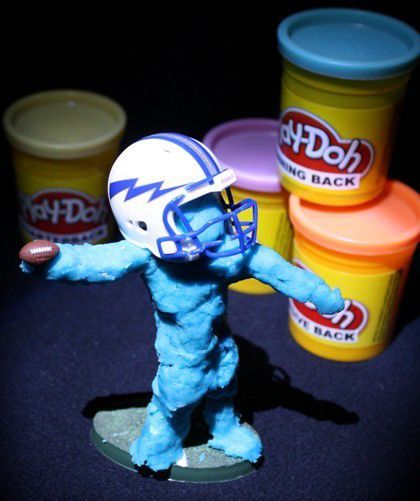
When Air Force has the ball this afternoon during its game against San Diego State, there will be times when the Falcons send four quarterbacks onto the field.
Well, not really. This isn’t some new, outside-the-box formation devised to confuse a defense.
But sophomore tailback Asher Clark, sophomore receiver Jonathan Warzeka and senior receiver Josh Cousins all were quarterbacks in high school. And the fact they’ll all be on the field at once, along with the player actually under center — either Tim Jefferson or Connor Dietz — underscores a major tenant of coach Troy Calhoun’s recruiting philosophy:
Find the best athletes and worry about specific positions once they get to the academy.
“I think if you’re at another university or if you’re in the NFL, I think position drives it,” Calhoun said. “Whereas here, I think it’s got to be athleticism.”
“We’re looking for the best player, not necessarily the best ready-made product as a freshman,” said secondary coach Charlton Warren, Air Force’s recruiting coordinator. “To find a 5-(foot-)11 corner who has 4.4(-second) speed (in the 40-yard dash) and get him to come here is pretty tough because everyone in America wants him. But a 5-10 quarterback that’s an option guy in high school that’s 4.4, the market for that guy as a quarterback isn’t as big.”
Take 5-10 sophomore Anthony Wright Jr. He arrived at the prep school in 2007 as a quarterback. But when Jefferson won the starting job, Wright shifted to Z receiver (a hybrid running back-receiver spot). Then, with the Falcons thin at cornerback when he got to the academy last year, he moved to the defensive backfield and started the last 10 games of the season at corner.
Another starter on defense — junior outside linebacker Andre Morris Jr. — also was a high school quarterback, giving the Falcons seven high school signal-callers (including Jefferson and Dietz) in their two-deep chart.
“I love quarterbacks and tailbacks,” Calhoun said. “I think quarterbacks have to handle the ball. I think they’ve got to know where other guys are lined up. They’ve got to have a feel for the game. They’ve got to have good ball skills too.”
In his first season at the academy, Calhoun moved backup quarterback Jim Ollis to tailback, and Ollis went on to be the team’s second-leading rusher. And Chad Hall, another high school quarterback, was moved from running back to Z receiver and then back to tailback.
“We all have athletic ability that shows, and we all can play a plethora of positions on the field,” Wright said. “But this is where the team needs us.”
Warren said Air Force also has had success with high school tight ends who were too small to be recruited by perennial top 25 schools. Examples include last year’s starting defensive ends — Ryan Kemp and Jake Paulson.
“You’ve got 6-3, 6-4 bodies that are 215 (pounds) and maybe not big enough for a lot of elite Division I programs tight end-wise, but in four years that’s Ryan Kemp,” Warren said. “Ryan Kemp was 190 pounds when he came here. Jake Paulson, the same thing — both of those guys were tight ends” in high school.
While asking a player to change positions might seem like a difficult task, Warren and Calhoun said it hasn’t been a problem.
“I think what you do, you’re honest with a kid,” Warren said. “‘We’re going to give you a legitimate shot at what we recruited you as.’ But when you get here and we say, ‘You can be the third-string quarterback or you could potentially be in a rotation at corner,’ then the kid makes that decision.”
Typically, it’s a no-brainer. All of the high school quarterbacks now at other positions did not hesitate to grab a chance to play.
“Whatever puts me on the field,” Warzeka said, “I’m happy with it.”
Photo by BRENT BRIGGEMAN, THE GAZETTE