






Ballot question determines fate of extra $1.2M
It might seem counterintuitive that at the same time the city has “excess revenue” it’s also having to slash the budget.
But that’s the situation Colorado Springs is in.
Voters on April 7 will get a chance to resolve at least the first issue. The city is asking to keep an estimated $1.2 million in excess property tax revenue that, otherwise, would have to be refunded.
The question city residents will see for Issue 1B, revenue retention for essential city services is: “Shall the City of Colorado Springs be permitted to expend up to $1,200,000 to provide essential City services, this amount being the estimated 2008 revenue above the 2008 fiscal year spending limitation mandated by the Taxpayer’s Bill of Rights, otherwise known as ‘TABOR’ (Colorado Constitution, Article X, Section 20 and City Charter, Article VII, Section 7-90), and constituting a voter-approved revenue change?”
Question: What if it passes?
Answer: Then the city will get to keep the money and use it for whatever the City Council wants. It could go to offset future budget cuts triggered by a steep decline in sales tax revenue. It could also go to restore some of the cuts the City Council has imposed this year.
Q: What if it fails?
A: Then the city will refund the money, as required by the Taxpayer’s Bill of Rights. The TABOR amendment allows various methods for refunding excess revenue, but the city in the past has used a credit on utility bills. Split among the roughly 210,000 electric ratepayers of Colorado Springs Utilities, the credit would be $5.71.
Q: How did the city get too much property tax revenue in the first place?
A: TABOR’s limit on annual growth in government spending is generally said to be the combination of population growth and inflation. Any excess has to be refunded. But the amendment’s provisions have some additional complexity. For local governments, the limit on spending growth is inflation plus “local growth,” or the change in the value of property inside an agency’s boundaries.
Also, TABOR says property tax revenue in particular can’t increase faster than inflation plus local growth, essentially creating a second cap on government growth. Even if the city doesn’t reach its overall revenue cap under TABOR, it still must refund property taxes collected in excess of the second cap.
That’s where Colorado Springs collected too much money. Usually, when property tax collections are projected to be higher than TABOR will allow, the city compensates by lowering its property tax rate. But in late 2007, as the city was preparing its 2008 budget, the City Council anticipated property values and property tax collections would decline because of economic conditions. Based on that reasoning, the council decided against lowering the property tax rate and instead maintained the rate at 4.944 mills. That’s about $79 annually for a house worth $200,000.
The city staff initially figured they’d have about $700,000 in extra money, so they set up an account to hold the money, which can’t be used without voter permission. In fact, the extra money amounts to about $1.2 million, according to Chief Financial Officer Terri Velasquez.
Q: Who are the backers and opponents?
A: There’s no officially organized campaign on either side. Eight of the nine City Council members voted to put the measure on the ballot. The “no” vote came from Councilman Darryl Glenn. Tax-cut crusader Douglas Bruce, who wrote the Taxpayer’s Bill of Rights, has created a Web site urging a “no” vote at www.savetabor.com.
–
Call Swanson at 636-0187
ELECTION COVERAGE
This story is part of The Gazette’s ongoing coverage of candidates and issues in the April 7 Colorado Springs mail-ballot election. Voters will elect four City Council members and decide four questions about city finances. Watch the paper and gazettedev.gazette.com/election for more news and analysis.
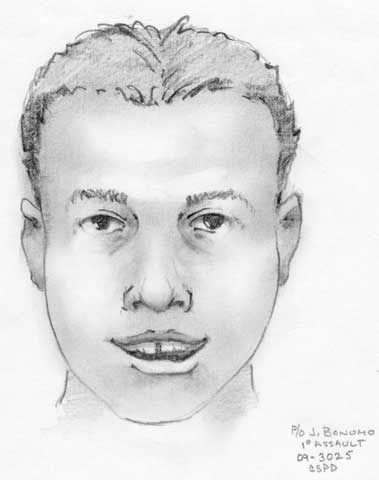
Sketch of suspect Photo by