






Broader labor agenda likely will find rough going
WASHINGTON • Labor, riding high after quick wins with President Barack Obama, faces the harsh reality that the Democratic-controlled Congress will not find it easy to push more fiercely contested legislation to improve the status of workers or the unions trying to organize them.
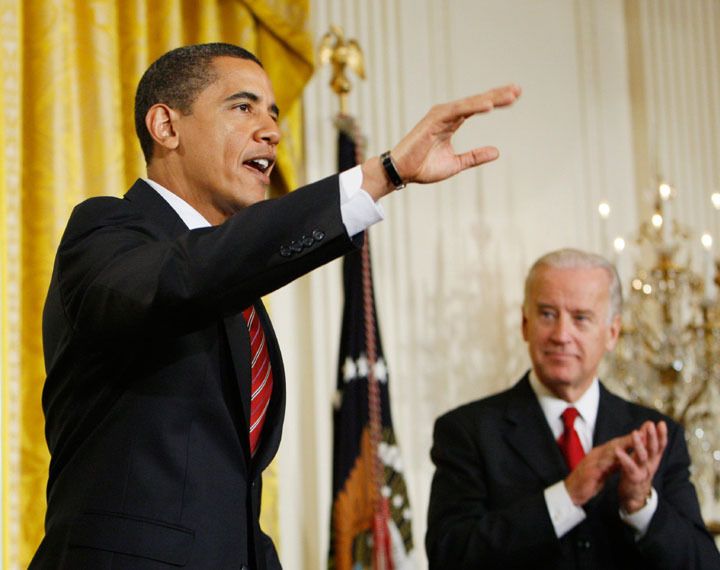
Obama on Friday issued executive orders that union officials say will undo Bush administration policies favoring employers. A day earlier, Obama signed the first bill of his administration, the Lilly Ledbetter Fair Pay Act, which allows more leeway for women and others seeking justice over pay discrimination.
“What a difference a pro-worker Congress and pro-worker president make,” SEIU International secretary-treasurer Anna Burger said in a statement before she attended the signing ceremony for the Ledbetter bill.
But no one, including the Democrats who control Congress, are predicting that other labor rights priorities will sail through with the same speed as the Ledbetter bill.
When asked what’s next on the labor agenda, Democratic leaders instead turn the conversation to bigger bills well beyond the scope of worker rights, such as the $819 billion economic stimulus plan the House passed or health care changes they hope to put together in coming months.
The stimulus plan contains provisions on job creation, job training, health care and extending unemployment benefits. “We think that that is a workplace fairness piece of legislation,” House Speaker Nancy Pelosi said.
On specific labor legislation, Democrats have indicated they will move with caution.
On Jan. 9, the House passed the Ledbetter bill together with a second bill aimed at helping women fight workplace discrimination by putting gender-based discrimination on an equal footing with other forms of discrimination in seeking punitive damages.
Republicans criticized that bill as a gift to trial lawyers, and Senate Democrats concerned that GOP opposition could doom the package put it aside, taking up only the Ledbetter bill.
The sparks generated by the companion bill are nothing compared to what could be the most spectacular, and most costly, fight of the year, over a bill making it easier for unions to organize workers.
The card check bill – hailed by supporters as the “Employee Free Choice Act” – would take away a company’s right to demand a secret ballot election on whether workers want collective bargaining representative by a union. Instead, a union would be certified when the National Labor Relations Board finds that a majority of workers have signed cards designating the union as their bargaining representative.
Organized labor sees the bill as crucial to its recruitment drives.
Unions represent about one in eight workers today, down from about one in five 25 years ago, although membership did increase slightly in 2008.
Business groups have vowed to do whatever it takes to defeat the bill.
On the other side, American Rights at Work, a labor advocacy group, this month launched a $3 million ad campaign in favor of the bill.
Obama’s orders
“We need to level the playing field for workers and the unions that represent their interests,” President Barack Obama said as he signed a series of executive orders Friday.
The orders will:
• Require federal contractors to offer jobs to current workers when contracts change.
• Reverse a Bush administration order requiring federal contractors to post notice that workers can limit financial support of unions serving as their exclusive bargaining representatives.
• Prevent federal contractors from being reimbursed for expenses meant to influence workers deciding whether to form a union and engage in collective bargaining.The Associated Press
Vice President Joe Biden applauds as President Barack Obama waves after signing executive orders on the Middle Class Working Families Task Force, Friday, Jan. 30, 2009, in the East Room of the White House in Washington. Photo by (AP Photo/Charles Dharapak)