






Salt Lake players feel right at home
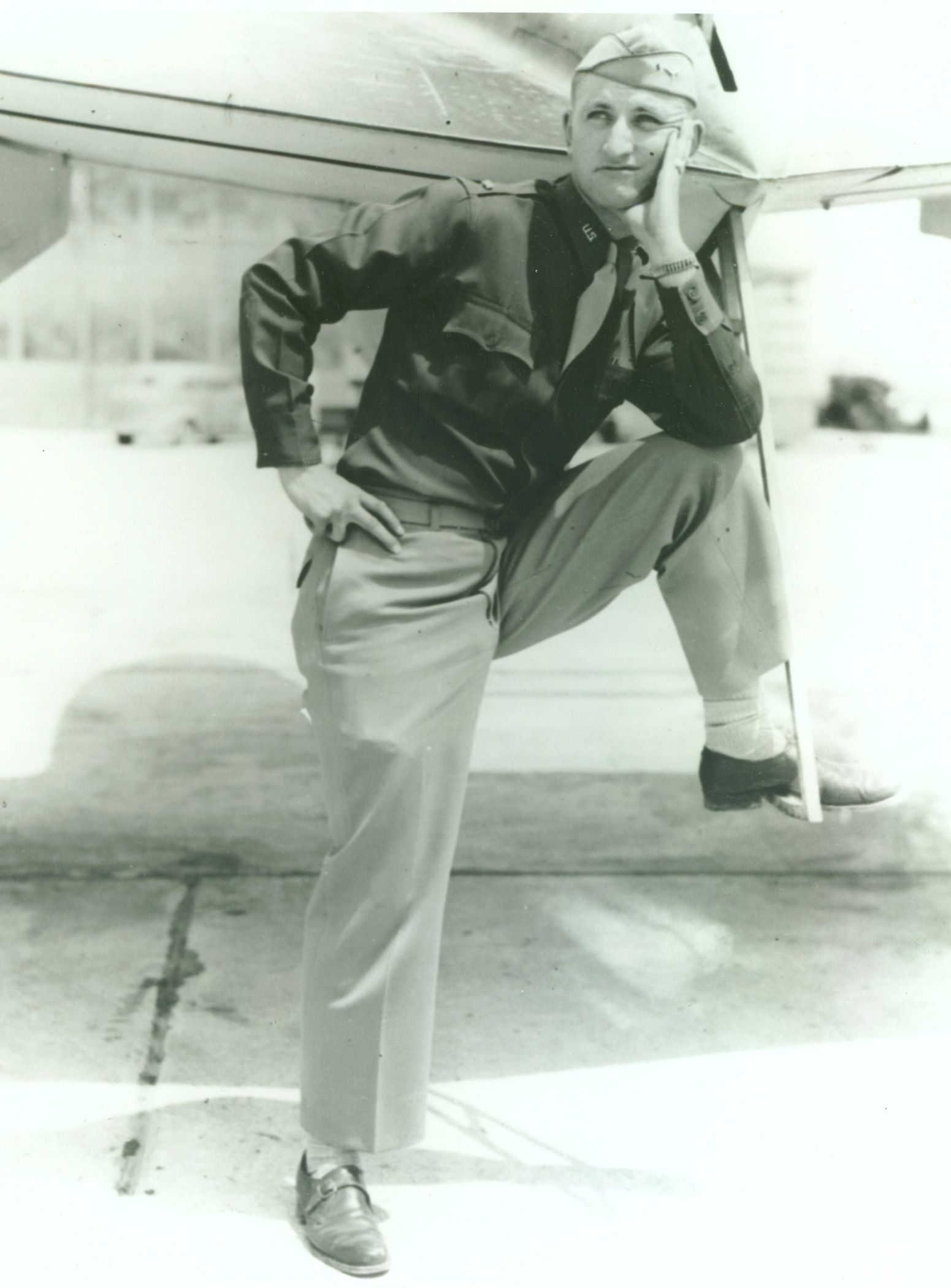
On Dec. 13, 1942, a somber ceremony took place at the main headquarters of Colorado Springs Army Air Base.
The ceremony memorialized a young 25-year-old Coloradan and Army Air Forces officer. The base was renamed Peterson Army Air Base in honor of 1st Lt. Edward J. Peterson, who lost his life in an aircraft accident the previous August. As the base marks the 70th anniversary of this event, here is Peterson’s story.
Peterson was born Nov. 16, 1917, and spent his early childhood years in Loveland and Berthoud. In 1931, his family moved to Englewood, where he graduated from high school in 1935. He ranked fifth academically in his class and was an all-conference standout in football and track. Peterson went on to Denver University, graduating in 1939 with a degree in education and later earned his master’s degree in 1940 while working three part-time jobs.During this time, Peterson became actively interested in aviation. While earning his civilian pilot’s license, Peterson met his future wife, Ruth Wallrich. She was from Alamosa and also a licensed pilot.
In March 1941, Peterson enlisted in the Army Air Forces Aviation Cadet program and reported to Stockton Field, Calif., for military pilot training. He completed training and received a commission as an Army Air Forces second lieutenant the following October.
In July 1942, Peterson reported for duty as an operations officer for the 14th Photographic Reconnaissance Squadron. Along with his fellow pilots, Peterson eagerly prepared for overseas combat with his squadron and their F-4 “Photo Lightning” reconnaissance aircraft.
The F-4 was an unarmed reconnaissance version of Lockheed’s P-38 “Lightning” twin-engine fighter.
As the squadron operations officer, Peterson had more flying hours in the P-38 aircraft than his fellow pilots. This experience also made him the squadron test pilot. On the morning of Aug. 8, 1942, Peterson prepared to make a routine test flight in an aircraft with an engine change. Everything appeared normal before takeoff, but witnesses saw something terrible as the aircraft lifted off the runway. Just as the landing gear came up, smoke poured from the left engine, which suddenly quit. The left wing dropped and hit the runway, igniting a fuel tank that engulfed the aircraft in flames as it crashed to the ground.
A base fire truck was on scene almost immediately. Three enlisted soldiers risked their lives by running through the massive fire to get Peterson out of the aircraft. They lifted him out of the cockpit by his parachute straps and carried him to a waiting ambulance that transported him to Glockner Hospital (now called Penrose) in Colorado Springs.
Peterson was badly burned on his legs, chest and head. Despite intense pain and blindness, he remained conscious and repeatedly asked those around him if he would regain his sight and be able to fly again. His fellow officers admired his bravery. Despite his fortitude, Peterson died from his injuries later that afternoon.
At his wife’s request, Peterson was cremated and his remains scattered over his native Colorado. To honor Peterson’s love of flying, a P-38 aircraft scattered the ashes in flight.
Edward Peterson was born Nov. 16, 1917, and spent his early childhood years in Loveland and Berthoud. In 1931, his family moved to Englewood, where he graduated from high school. After graduating from Denver University in 1939, Peterson enlisted in the Army Air Forces Aviation Cadet program in March 1941. Photo by CONTRIBUTED PHOTO
Edward Peterson was flying an F-4 “Photo Lightning” reconnaissance aircraft when he crashed during training. Photo by CONTRIBUTED PHOTO