






AFA panel: Put sports under old command
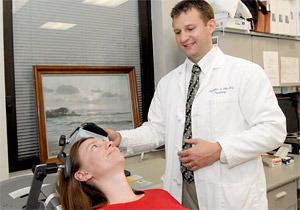
Dr. Ron Acierno, a psychologist with the Ralph H. Johnson VA Medical Center, explained how it works: “The Veteran sits in a chair and thinks about the traumatic event they experienced while they were in the war zone. While that’s happening, magnetic pulses stimulate the part of the brain that allows you to feel in control of a situation. This is important, because one of the cardinal symptoms of PTSD is a sense of helplessness or lack of control over the event. Thus, when the patient is reminded of the event, these feelings of helplessness — this lack of control — returns.
“The theory,” he said, “is that combining stimulation of this brain center with exposure to the traumatic memory will allow patients to replace that sense of helplessness with a sense of perceived control over the disturbing memory.”
Acierno said TMS has already been used successfully in treating depression and now — when used in combination with prolonged exposure therapy — it appears to be generating positive results as a treatment for PTSD.
“Combining exposure therapy with TMS is a novel approach to treating PTSD,” he said. “We’re in the early stages of this type of therapy, but the results are encouraging. We’ve seen some of our patients experience a nice turnaround early on. We haven’t had a large number of subjects, but we’re seeing some good results.”
There’s No Place Like Home
Acierno noted that VA also offers Prolonged Exposure Therapy to Veterans in their homes through televideo technology.
“Specifically, VA researchers are assessing the safety implications and overall comparative effectiveness of conducting Prolonged Exposure Therapy over the computer or via iPads,” he said. “This saves travel time and increases session attendance. At VA we call this ‘meeting the Veterans where they’re at.’
“For example,” he continued, “they might have child care responsibilities, or they might spend a lot of time at work. Or they might live far away from a VA medical center. With an iPad or a home computer, or even a Smartphone, they’re connected to us, no matter where they are. They can still receive the same treatment.”
For more information on PTSD and available treatments, go to www.ptsd.va.gov.
Veteran Laura Lythgoe relaxes while Dr. Christopher Pelic prepares to ‘hook her up’ to equipment that will provide gentle magnetic pulses to her brain. Photo by