






SIDE STREETS: 10 years of holding up a mirror to neighborhoods
It’s unbelievable to me, really. You probably don’t believe it either.
But it’s true.
Side Streets is 10 years old this week!
(I know many are wondering: What? Did he start writing it when he was 18?)
Anyway, I feel like I ought to buy you all a cake to thank you for reading all this time. (You have been reading, right?)
That’s 1,000-plus columns, every Monday and Thursday, until recently when I added a Saturday column.
Mind if I reminisce?
Side Streets evolved after I returned to writing following a stint as city editor. (I “returned to writing” after a new Gazette publisher put a boot to the butts of the newsroom leadership team, even dumping moi!)
It took a year, but I persuaded then-editor Sharon Peters The Gazette needed someone to hold a mirror up to life in Colorado Springs neighborhoods.
My inspiration was Heywood Broun, the crusading columnist for The Tribune and The World in New York City from 1912 until 1939.
Just before his death in 1939, Broun wrote: “I would like to see some columnists do the side streets and the suburbs and chronicle the joys and tragedies of the ordinary run of people.”
That’s what I try to do — highlight the extraordinary people of the Pikes Peak region and reflect the issues that impact your daily lives. Maybe even help, if I can.
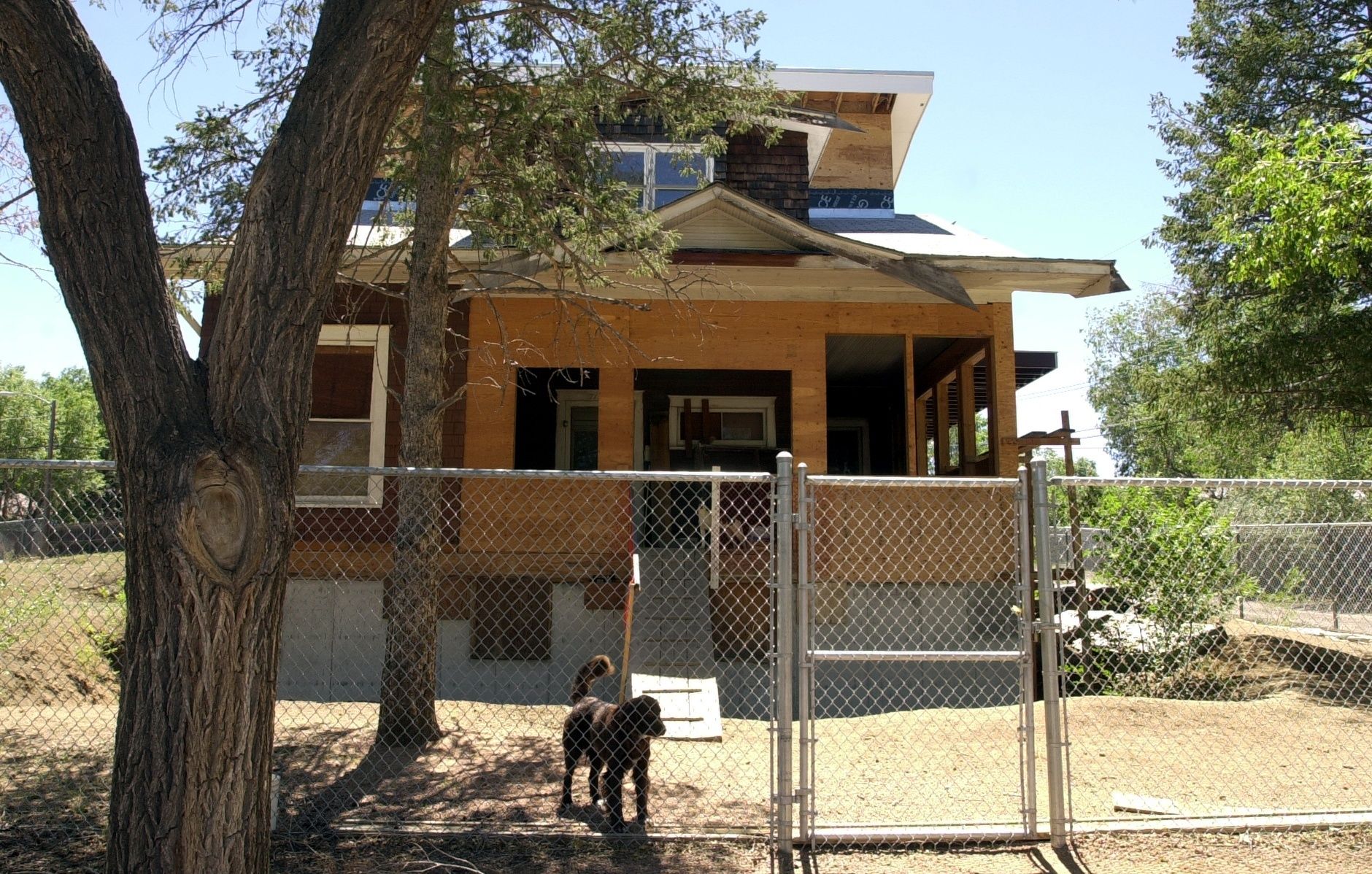
So on July 18, 2002, Side Streets debuted under the headline: “Houses Beyond Hope.” It documented two condemned houses — one burned out in Cragmor, the other a rotting mess on the west side. Neighbors were frustrated by the inability of City Hall to help.
Condemned, rotting homes have plagued the city for decades. The July 11, 1934, Gazette reported that City Manager E.L. Mosley asked the City Council for an ordinance to enable him to deal with “abandoned, tumbledown buildings or structures.”
Anyway, that first column described the need for a blight ordinance to protect neighborhoods. An ordinance passed in 2006 but it hasn’t solved the problem.
While the Cragmor house, owned by Josie Trujillo, was being renovated before her death in May 2011, far less progress has been made on the house I consider the poster child for blight.
Since 1973, Joseph O’Brien’s house at 715 N. 24th St. has been uninhabitable. It’s the longest-condemned house in the city.
O’Brien’s son, Glen, has replaced windows and wiring and taken a few swipes at the dump with a paint brush. But it remains an ugly eyesore.
I’m proud, however, of helping folks get sidewalks replaced, wheelchair ramps installed, streetlights fixed, railroad crossings improved and rogue homeowners associations exposed.
Best of all, I’ve met amazing people who have opened their lives and allowed me to tell their stories.
For that, I thank you.


