



When necessity meets futility | From the Editor
So here we are, 45 years later, bombing Iran.
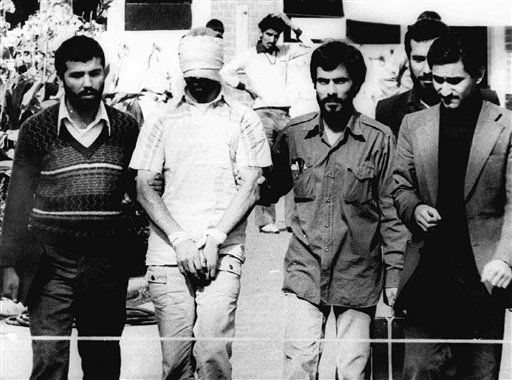
The Iran hostage crisis began on Nov. 4, 1979, when 52 Americans were abducted at the U.S. Embassy in Tehran. It lasted 444 days. That’s more than a year of anguish for the hostages and the nation.
In November of 1979, myself and three others shared a corner suite at Westfall Hall at Colorado State University. Calling it a suite is generous. The two bedrooms were barely large enough for a bunk bed and two tiny desks. Between those was a small living room.
In those days, everyone I knew had asked for a stereo system as their high school graduation present. I asked for a color television instead. As a result, ours was the only corner suite on the seventh floor with a color TV.
That made our tiny living room the gathering place for the entire floor from 10 p.m. to midnight. First, we would watch the local news. That was followed by the Iran hostage update. We ended each evening with Rocky and Bullwinkle.
Organically, the seventh floor at Westfall Hall became a hub of current events awareness.
I was already headed to the Air Force at the end of the semester, having signed up on the delayed enlistment program. Everyone knew that. Conversations about serving in the military became commonplace, which was new for our generation.
This was right after Vietnam and during the Carter administration. The military was still reviled. Service members weren’t thanked for their service. Instead, they were told not to wear their uniforms if they wanted service at local restaurants.
Our outrage over the hostages and conversations among each other changed those perceptions, albeit on a micro scale.
Now, students are again gathering in the corner suite at Westfall Hall, sharing news about Iran.
I have mixed feeling about the current situation. I see the necessity of it. I also see the futility.
First, the necessity.
The Quran is very hard on lying and liars – particularly those who lie against Allah. But the Quran does make three exceptions when lying is acceptable, one of which is in time of war. The Iranian regime has considered itself at war with the West since the 1979 revolution. They’ve created well-armed proxies to wage that war around the region. At home they are pursuing – and will pursue endlessly – the power of nuclear weapons.
While theirs is a patient war, it’s not passive. They actively wage through the proxies. They wage it through nuclear development. They wage it in the classroom as children learn that saying “death to America” is correct and proper.
The Iranian regime is pursuing victory for the glory of Allah and will continue to do so. They see nukes as the only path to that victory.
The West has tried pacification. They’ve tried negotiation. They’ve repeatedly scolded Israel. They’ve sent palettes of cash trying to stop Iran’s pursuit of nukes. Each time, the Mullahs negotiated with lies. They will continue to lie about it because Allah blesses that lie.
The end result will be a mushroom cloud over Tel Aviv. Perhaps another over New York. And London. And Paris.
But then there’s the futility.
Regime change doesn’t work, particularly in the Middle East. I’m glad Saddam Hussein is gone, but Iraq is arguably more dangerous now. Bashar al-Assad was toppled in Syria, which has become unpredictable since.
We fought for years in Afghanistan and the Taliban is back in power. They endured. That’s what the Mullahs in Iran are trying to do.
For regime change to work, the existing structure must be torn down to the nubs, as in Germany and Japan during World War II. It them must be rebuilt. I don’t think the West has to willpower to do that in Iran.
It’s hard when necessity meets futility.
PREV
PREVIOUS

Monument's Caldwell speaks out on decorum, grandstanding
Several speeches from Colorado legislators this week have raised new worries about decorum and grandstanding in the state House after two members talked about immigration and Iran using what’s called a “point of personal privilege.” Under the rules of the chamber, moments of personal privilege are allowed for a member to speak for up to […]

U.S. House probes reports of fraud, waste in Colorado’s Medicaid program
A congressional committee is probing reports of waste, fraud and abuse in Colorado’s Medicaid program, citing recent stories outlining over-billing in transportation spending and alleged improper payments in autism services. The U.S. House Committee on Energy and Commerce has sent a letter to Gov. Jared Polis and the Colorado Department of Health Care Policy and […]