



Deep dive: VENU stock recovering after plummeting in January
Company estimating roughly 100% increase in total assets year-over-year
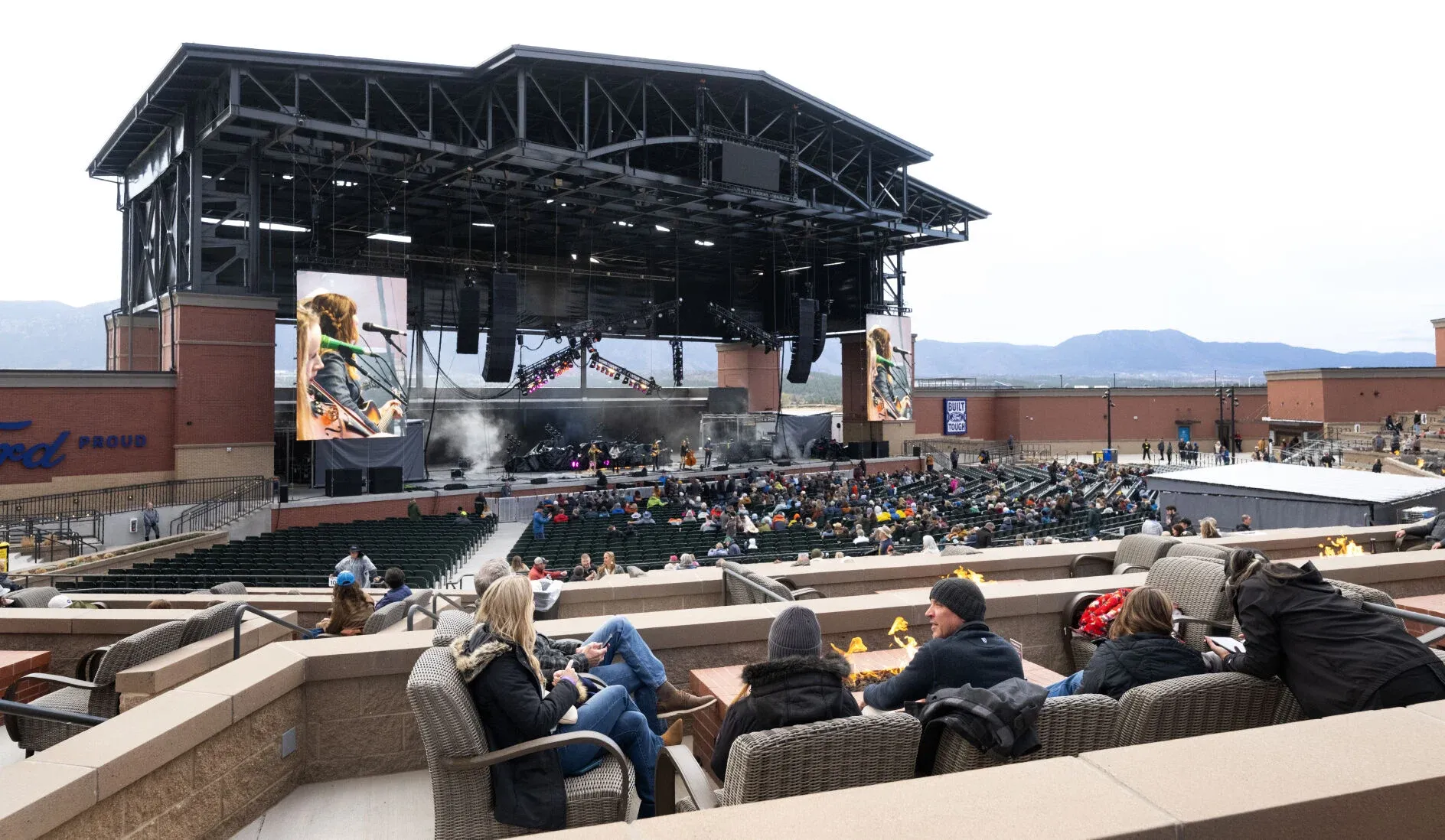
Stocks in VENU, the El Paso County-based hospitality and entertainment company that developed the open-air Ford Amphitheater near Gleneagle, are slowly recovering this month after plummeting by around 40% in late January.
Though it’s “surprising” stocks haven’t bounced back significantly in subsequent trading days, the market’s activity hasn’t been detrimental to the company’s well-being, East Coast-based stock market analyst Rick Munarriz said.
“At the end of the day, VENU Holding Corp. has some really strong assets, and I think it’s going to do well and get past this,” he said.
Munarriz has been a contributing writer for The Motley Fool for more than 30 years; the Virginia-based financial services company provides investment advice, stock recommendations and other financial education to investors.
Additionally, the status of VENU’s stock is not necessarily indicative of its overall health, said Chairman and Chief Executive Officer J.W. Roth.
VENU’s preliminary financial results from the fourth quarter of 2025 estimate its total assets have grown 100% over the last year, for example. Roth told investors last month the company is on track to become operationally profitable by the end of this year.
VENU’s stocks sunk in the aftermath of the company’s Jan. 27 announcement that it proposed offering $75 million of shares of its common stock, a market reaction Munarriz attributed to share dilution.
“This happens. Investors fear dilution,” Munarriz said.
When a company adds more shares it dilutes, or reduces, the ownership percentage for existing shareholders.
Roth, on the other hand, said the market reaction reflected investor attempts to short VENU’s stock, or bet against it.
The proposed offering was intended to raise capital to fund a portion of development costs for several other entertainment venues the company is constructing throughout Texas, in Oklahoma and elsewhere in Colorado.
VENU’s stock dropped from $8.59 a share at the New York Stock Exchange’s closing on Jan. 27 to $5.14 a share at market’s close on Jan. 28. When the market closed on Nov. 27, 2024, the day VENU went public, its shares were selling at $10.12 each.
Roth terminated the public offering just a day after it was announced, stating in a news release that market conditions at the time were “not conducive for an offering on terms that would be in the best interests of the company’s shareholders.”
Recovery has been modest: On Tuesday, VENU stock closed at $5.75 a share.
Though it was unusual for VENU to pull this kind of offering, it isn’t rare for companies to do so; stocks can react negatively to these types of announcements, Munarriz said.
“VENU doesn’t need the money. It’s a well-managed company, but something like this can make investors (stop and) go, hey — which I think is why stocks didn’t bounce back,” he said.
What stands out to Munarriz about VENU’s proposed public offering is the degree of the market’s negative reaction and its slow recovery.
“A 40% drop is something I don’t ever recall seeing,” he said. “I have never seen a stock shoot higher after announcing a stock offering, but I can’t think of a time when the drawdown the following day was more than 10% in an otherwise ordinary market day.”
Munarriz noted the magnitude of VENU’s offering, relative to the company’s size, may have played a part in the stock’s sudden drop.
At its $8.59 per share close on Jan. 27, VENU’s market capitalization was $371 million. Offering $75 million in shares of common stock was a little more than 20% of the company’s market capitalization, “a larger percentage than the typical offering,” Munarriz said.
Roth told The Gazette the proposed offering of $75 million of shares of common stock was an opportunity to accelerate the construction schedule for venues his company is developing in Centennial, south of Denver, in Broken Arrow, Okla., and in El Paso and McKinney, Texas.
Upon announcing it, he said, the stock was shorted, in which investors hope to profit by borrowing shares they believe will fall in value, sell the shares and then plan to purchase them back later at a lower price.
“I think whoever it was believed I would go through with the offering regardless of the share price. So I pulled the offering,” Roth said.
Shorting is a common trading strategy, Munarriz said, but he disagreed that the market’s reaction to VENU’s proposed public offering was caused by that.
The number of VENU’s shorted shares has increased since October, digital financial market platform Chart Exchange shows. About 650,400 shares were shorted as of Oct. 31, a figure that increased to just over 1 million on Jan. 15 and again to 1.3 million on Jan. 30.
However, short interest represents just 5% of VENU’s shares outstanding, Munarriz said.
“The number of shares shorted has gone up … but there’s no denying the stock took a hit the day after announcing the offering. (Shorting) is not why the stock fell. You’re diluting the stockholders by a lot more than 5% sold short by the end of January,” he said.
Roth was surprised by the market’s reaction to the proposed offering, but it isn’t something he can control, he said.
“I pay more attention to building the company (than the stocks), because the stocks don’t necessarily show how successful we are. Significant shareholders care about one thing: Is the company doing what it should be doing in terms of building the business? I’ve been doing this 35 years; when it’s all said and done, the share price will always find its way to the value of the company. There are times when stocks are up and times when they’re down. It’s just the way it is,” Roth said.
VENU on Jan. 27 preliminarily reported its total assets are estimated to be between $352.8 million and $355.4 million as of Dec. 31, compared with $178.4 million as of Dec. 31, 2024 — or a 98% to 100% increase year-over-year.
Among other highlights, VENU’s total revenues are estimated to be on par with 2024 revenues, ranging between $17.8 million to $18.7 million in 2025.
Ticketing revenue is now making up a larger percentage of overall revenue, Roth said.
Restaurant revenue increased by nearly 9% in the last quarter of 2025 after Roth’s Sea & Steak opened inside VENU’s recently completed Sunset Hospitality Collection located along the edge of the Ford Amphitheater in northern Colorado Springs.
Roth has also been purchasing back company stock.
“At the end of the day, we’re doing what we need to be doing, and I am so excited about where we’re going,” he said.
PREV
PREVIOUS

Discovery Canyon's Alaia Sloan wins 100 fly, 100 backstroke titles at state; Thunder place third
Alaia Sloan entered the finals with a humble approach. Sloan earned the top seed in both the 100-yard butterfly and 100-yard backstroke for the finals at the 3A state swimming and diving championships and recognized that her seeding meant nothing. Sloan still had to race both events to win first. Well, she did. The Thunder […]

People who enhance our lives | Such A Fine Sight to See
Keep your eyes and ears open. People are there-ready to make a difference in your life. Let them in, and you will remember them for a lifetime. We have all had these experiences, and here are a few examples from my own life. In late November my husband and I traveled to New Zealand for […]