



The fee-ding frenzy in the Colorado Legislature | From the Editor
THE ASSOCIATED PRESS
I was having breakfast at an area diner and saw an interesting sign next to the cash register. It said “3.5% inflation fee applied to all checks.”
Rather than print menus with the correct price, it’s added like a tax. It’s clearly a deceptive way of masking a price boost, but it’s far from unprecedented.
It’s a lot like what some airlines are doing with bag fees and seat reservation fees. It’s also a lot like what the Colorado Legislature has done. And done. And done.
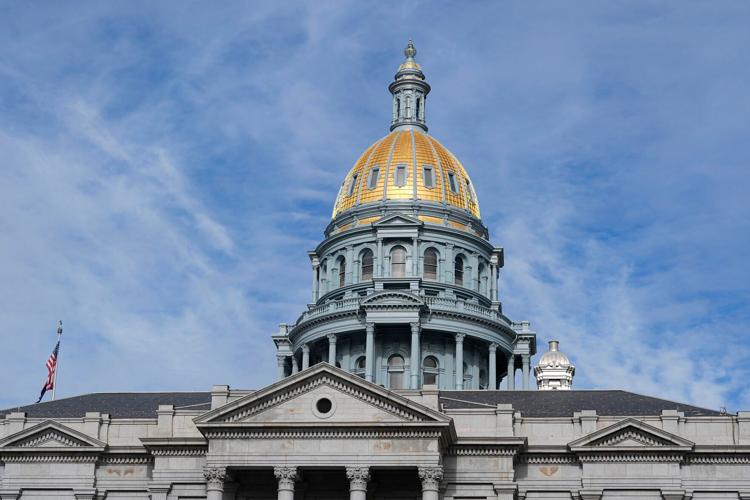
The Taxpayer’s Bill of Rights, enacted in 1992, was intended to constrain the growth of government by requiring voter approval for tax increases. Since then, Colorado lawmakers have built a new structure to avoid that requirement, according to a Denver Gazette article written by Scott Weiser.
The creation of TABOR-exempt state-owned “enterprises” has allowed government to increase fees from 46% of total state spending in 1996 to 71% of state spending in 2023 without requiring approval from taxpayers, Weiser wrote, citing a study by the Common Sense Institute.
The deception rolls on and is showing no signs of slowing. One big difference between what the businesses are doing and what the state is doing is rooted in choice. We can choose not to dine at that restaurant or fly on that airline. With the government, we are coerced into compliance.
And despite the fee-ding frenzy that saw fee-based enterprise revenues rise from $742 million to $20.9 billion between 1992 and 2020, Colorado now faces an $800 million shortfall on a $44 billion budget.
The choices are clear — spend less or take in more. The first choice is impossible for our current legislature. Unlike our outstanding local city and county governments, the state no longer pretends to be stewards or our money. In their eyes, we’re the problem for voting against them each time they want to reach into our pockets.
No. They’ll get past the current crisis and go with option 2.
So as the current budget crisis is resolved, they will learn nothing and go on creating enterprises to take larger and larger percentages of our money.
The Laffer Curve shows that there is a threshold at which higher tax rates equate to lower tax revenues. That’s because tax revenue is generated each time money changes hands. When the tax rate becomes so onerous that people spend less, the revenue declines.
Since fees are simply a tax in disguise, the same holds true.
And before you laugh at the Laffer Curve because of its silly sounding name, keep in mind that Arthur Laffer himself said that the idea wasn’t all his. He drew from multiple sources, including Adam Smith and John Maynard Keynes, the godfathers of current conservative and liberal economic ideologies.
So Colorado will likely continue to raise taxes through sleight of hand again and again and again because that’s what you do in Eastern California.
But it’s a tactic doomed to failure.

PREV
PREVIOUS

Shining Mountain a once-in-a-lifetime opportunity | Guest Column
Facebook Twitter WhatsApp SMS Email Print Copy article link Save Facebook Twitter WhatsApp SMS Email Print Copy article link Save The City’s ability to purchase 355 acres of open space inside the city is a fantastic, once in a lifetime opportunity. Purchasing this open space by the city was first considered in the Mid-1990s, decades […]
Commissioners reach boiling point over unfunded mandates
Facebook Twitter WhatsApp SMS Email Print Copy article link Save Facebook Twitter WhatsApp SMS Email Print Copy article link Save Teller County commissioners reached the boiling point over unfunded mandates passed down by the state legislature for years. Last week, commissioners Dan Williams, Bob Campbell and Erik Stone sent a letter to Gov. Jared Polis, […]